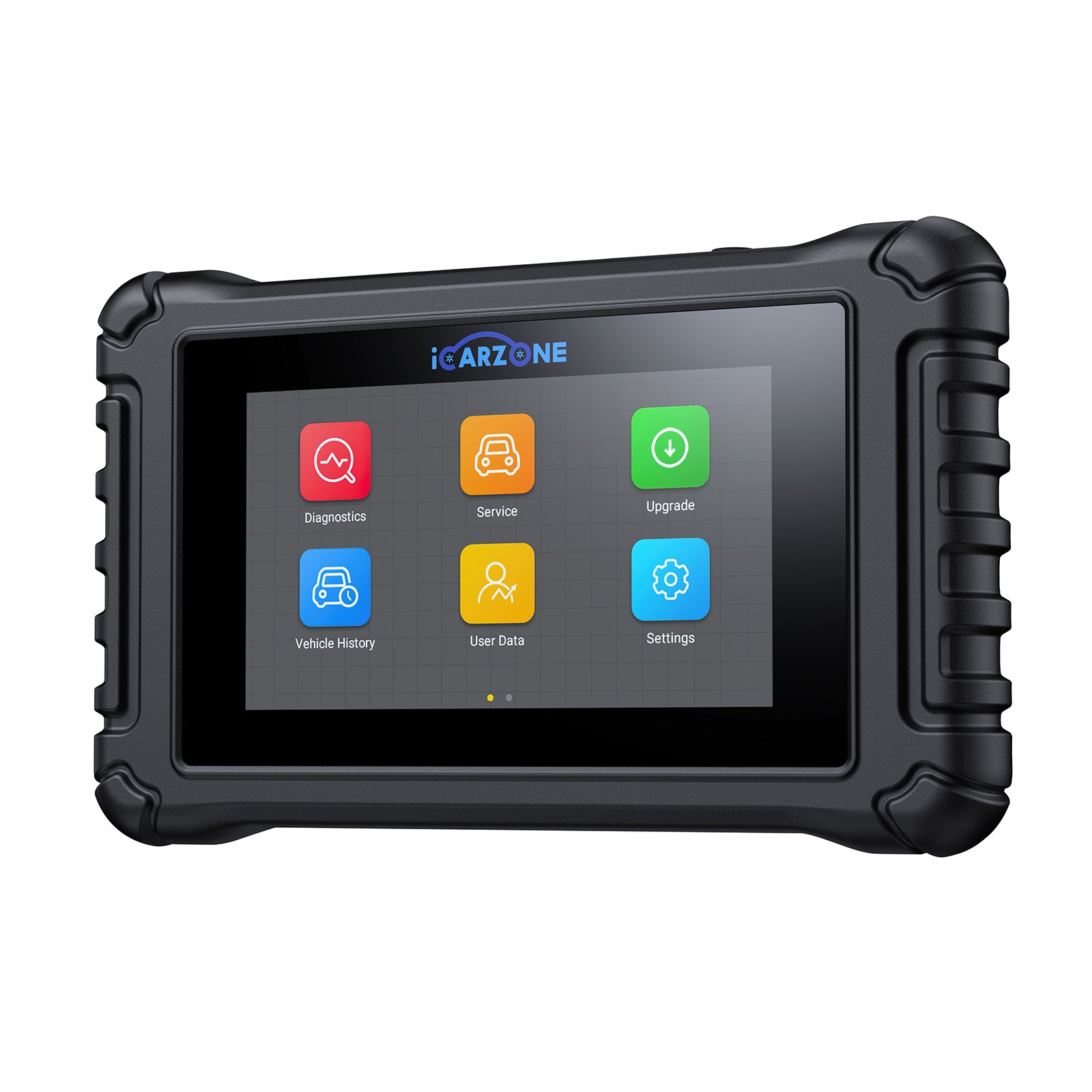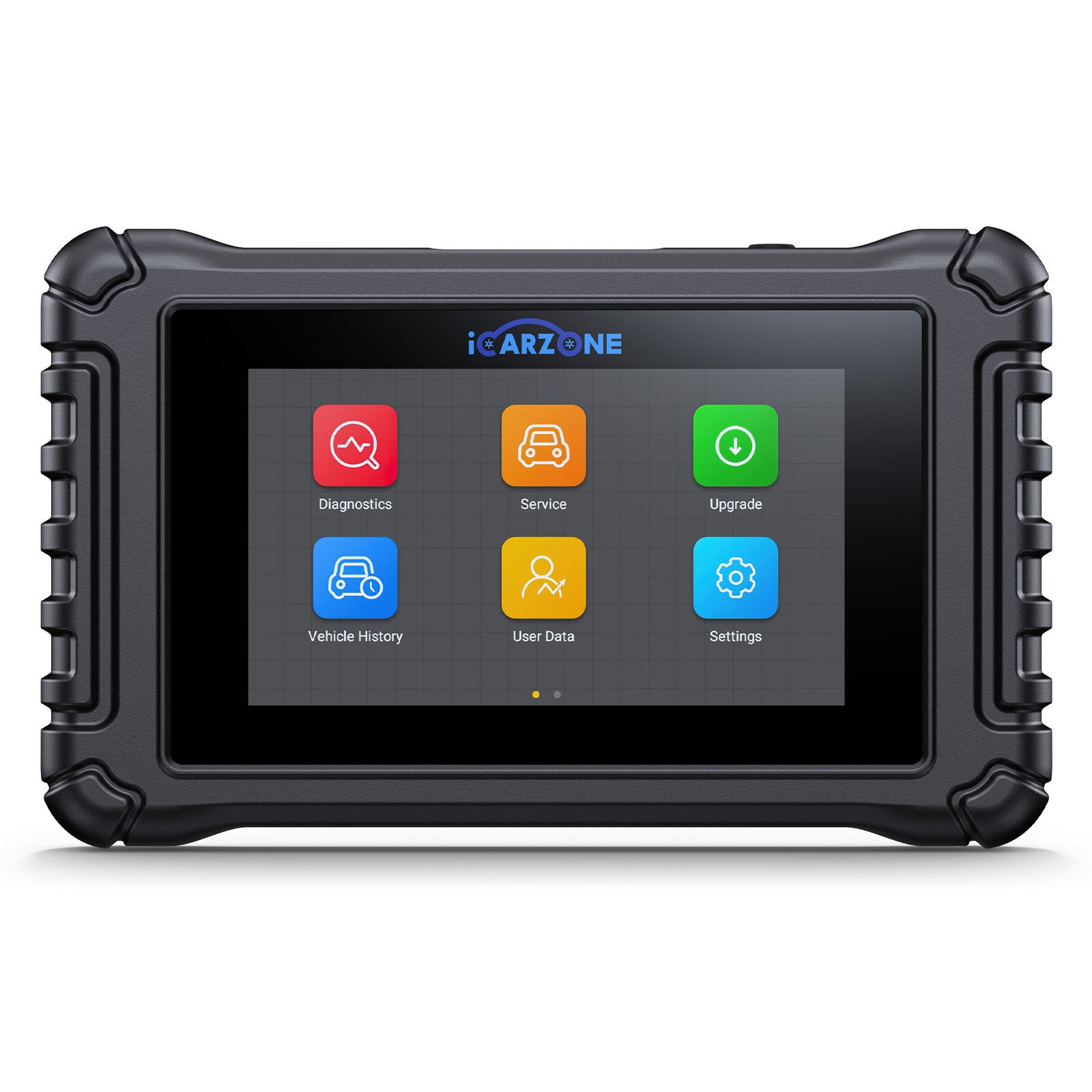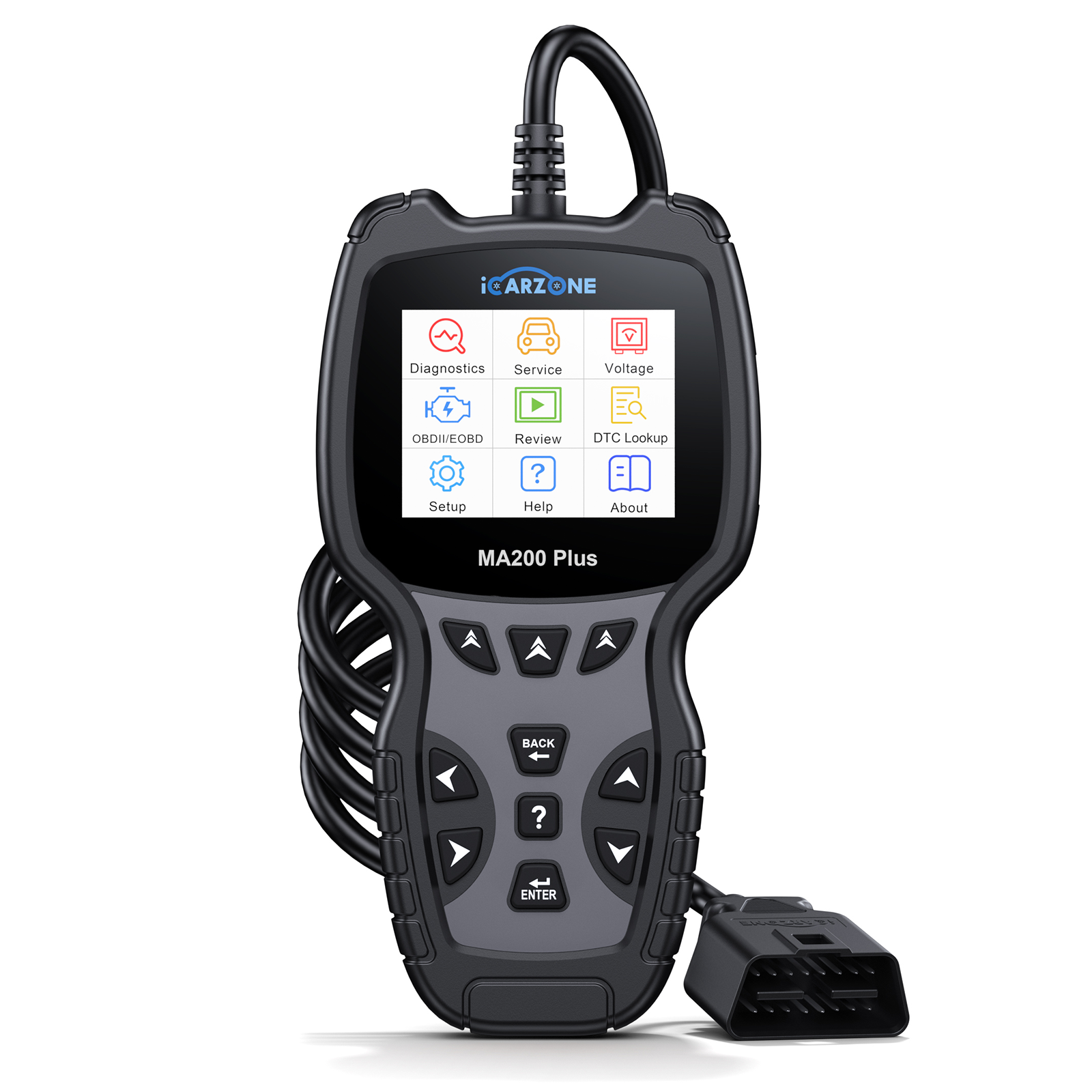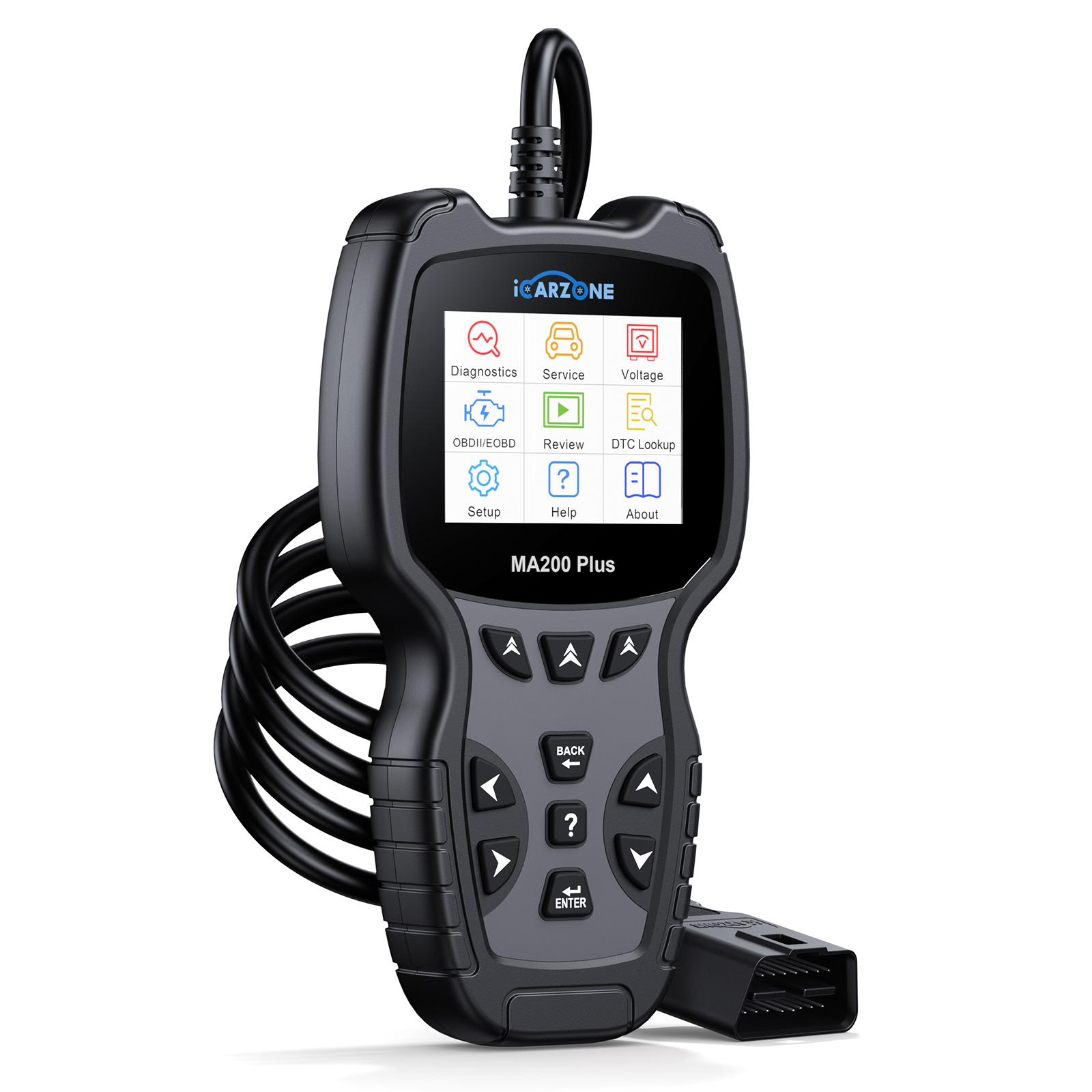

P0073 Code in BMW 3 Series: Fix Ambient Sensor Issues with ICARZONE MA900

P0073 Code in BMW 3 Series: Fix with ICARZONE MA900
Solve ambient air temperature sensor issues in 2012-2023 3 Series. Diagnose and repair with MA900's BMW-specific tools.
Fix P0073 with MA900 Now1. What is P0073 in BMW 3 Series?
P0073 is an OBD-II Diagnostic Trouble Code indicating an Ambient Air Temperature Sensor Circuit High Input. In the BMW 3 Series—one of the most popular luxury sport sedans—the ambient air temperature sensor (AAT sensor) provides critical temperature data to multiple vehicle systems, and P0073 specifically indicates a high voltage signal from this sensor.
The 3 Series uses ambient temperature data for various functions including climate control, engine performance adjustments, and even safety systems like traction control. The primary sensor is typically located behind the front bumper, with some models featuring additional sensors. P0073 triggers when the sensor sends a voltage signal above the expected range (usually above 4.5V), indicating a potential open circuit or sensor failure.

Why P0073 Matters for 3 Series Owners
BMW engineered the 3 Series with sensors to optimize performance and comfort. An ambient temperature sensor issue creates several problems:
- Inaccurate outside temperature display on instrument cluster
- Climate control system malfunctions, including improper heating/cooling
- Engine performance adjustments based on incorrect temperature data
- Potential issues with traction control and stability systems
- Illuminated Check Engine Light that won't reset until the issue is resolved
- 2019+ models may experience reduced efficiency in adaptive cooling systems
2. Common Causes in 2012-2023 BMW 3 Series
P0073 in 3 Series models has distinct causes tied to BMW's engineering—here are verified issues with real owner examples:
- Failed Ambient Air Temperature Sensor (2016 328i xDrive) — A 2016 328i owner with 62,000 miles noticed erratic temperature readings. ICARZONE MA900's Sensor Voltage Test showed a constant 5V signal, indicating sensor failure. The sensor had degraded due to exposure to road salt and temperature extremes common in northern climates. Replacing with OEM sensor #65816936943 restored proper functionality.
- Damaged Wiring Harness (2015 335i) — A 2015 335i owner's P0073 appeared after front bumper removal for service. MA900's Circuit Continuity Test identified a broken wire. Inspection revealed the sensor harness had been pinched during reassembly—common in F30 models with tight engine bay clearances. Repairing the wiring and applying protective loom resolved the issue.
- Corroded Connector (2014 320i) — A 2014 320i owner in coastal Florida experienced intermittent P0073. MA900's Connection Resistance Test showed high resistance at the sensor connector. Salt air exposure had caused corrosion on the pin contacts. Cleaning with electrical contact cleaner and applying dielectric grease fixed the intermittent connection.
- Sensor Location Issues (2018 330i) — A 2018 330i owner who installed an aftermarket front lip spoiler developed P0073. MA900's Sensor Function Test showed the sensor was reading abnormally high due to heat soak from the radiator. The aftermarket spoiler had redirected airflow, causing inaccurate readings. Relocating the sensor per BMW's recommended position resolved the code.
- Control Module Software Issue (2021 330i G20) — A 2021 330i owner experienced P0073 in cold weather. MA900's BMW TSB Lookup identified TSB 21-04-03, which addressed a software calibration issue in early G20 models. Updating the Body Control Module (BCM) software eliminated the false code.
3. Key Symptoms in BMW 3 Series
Display and Climate Symptoms
- Illuminated Check Engine Light with P0073 stored
- Incorrect outside temperature reading (often shows "-40°F" or "140°F")
- Climate control system not maintaining set temperature
- AC compressor cycling erratically
- Heated seats or steering wheel activating unexpectedly
- Automatic climate control switching modes randomly
Performance and System Symptoms
- Engine running in cold-start enrichment mode longer than necessary
- Reduced fuel efficiency in warmer weather
- Traction control light illuminating intermittently
- Adaptive headlights not adjusting properly in cold weather
- 2019+ models: "Driving Stability Reduced" message
- Symptoms worsening in extreme temperatures or after car washes
4. 3 Series Engines/Trims Prone to P0073
BMW service data highlights these 3 Series configurations with highest P0073 incidence:
| Engine | Model Years | 3 Series Trims | % of P0073 Cases | Primary Risk Factor |
|---|---|---|---|---|
| 2.0L Turbo 4-cylinder (N20/B48) | 2012–2019 | 320i, 328i, 330i | 43% | Wiring harness vulnerability in F30 platform |
| 3.0L Turbo 6-cylinder (N55/B58) | 2012–2019 | 335i, 340i | 27% | Heat-related sensor degradation near turbocharged engine |
| 2.0L Turbo 4-cylinder (B48) | 2019–2023 | 330i, 330i xDrive | 16% | Software calibration issues in early G20 models |
| 3.0L Turbo 6-cylinder (B58) | 2019–2023 | 340i, M340i | 10% | Connector issues with revised sensor design |
| Plug-in Hybrid (B48 + Electric) | 2016–2023 | 330e | 4% | Additional thermal management complexity affecting sensor |
Critical TSBs for 3 Series P0073:
- BMW TSB 14-07-02 (2012–2018 F30 3 Series): Wiring harness protection update for ambient temperature sensor.
- BMW TSB 18-05-03 (2016–2019 330i/340i): Sensor replacement guidelines for intermittent P0073.
- BMW TSB 21-04-03 (2019–2021 G20 3 Series): BCM software update to resolve false P0073 codes.
5. Diagnostic Steps with ICARZONE MA900
Diagnosing P0073 in your 3 Series is precise with ICARZONE MA900's BMW-specific diagnostic tools:
| Step | Action with MA900 | 3 Series-Specific Goal | Pass/Fail Criteria |
|---|---|---|---|
| 1 | Full System Scan > Select "BMW" > "3 Series" > "Body Control Module" | Confirm P0073 and check for related codes (P0070, P0071, P0072, P0074) | Pass: Isolated P0073 | Fail: Multiple temperature sensor codes |
| 2 | Sensor Tests > "Ambient Air Temp Sensor Test" | Monitor live voltage readings from sensor at various temperatures | Pass: Voltage ranges 0.5-4.5V corresponding to temperature | Fail: Voltage >4.5V (high input) |
| 3 | Electrical Tests > "Circuit Continuity Test" |
|
Pass: Continuity present, resistance <5 ohms | Fail: Open circuit or high resistance |
| 4 | Live Data > "Temperature Sensor Comparison" | Compare ambient sensor data with other temperature sensors | Pass: Readings correlate reasonably | Fail: Ambient reading drastically different |
| 5 | Service Functions > "BMW TSB Lookup" > Enter 3 Series' VIN | Check for applicable technical service bulletins | Pass: No relevant TSB | Fail: TSB applies (follow recommended fix) |
Case Example: A 2017 330i with 58,000 miles failed Step 2 (constant 5V reading) and passed Step 3 (good continuity). MA900's BMW Component Location feature pinpointed the sensor behind the front bumper, passenger side. Inspection revealed the sensor had been damaged by road debris—a common issue in F30 models with exposed sensor placement. Replacing the sensor with OEM part #65816936943 and performing MA900's Sensor Calibration resolved P0073. A test drive in varying conditions confirmed accurate temperature readings and proper climate control operation.

6. Fixes for 3 Series' P0073
Resolving P0073 in your 3 Series requires addressing ambient temperature sensor system issues—here's how to address each root cause with ICARZONE MA900 guidance:
1. Replace Ambient Air Temperature Sensor
- Verify sensor failure using MA900's Ambient Air Temp Sensor Test.
- Locate sensor based on your 3 Series generation:
- F30 (2012-2019): Behind front bumper, passenger side, near fog light
- G20 (2019-2023): Integrated into front bumper cover, driver side
- For F30 models:
- Remove 4-6 Torx screws securing front bumper cover (T25)
- Gently pull down bumper cover to access sensor
- Disconnect electrical connector by pressing tab and pulling
- Remove sensor from mounting bracket (usually clips in place)
- For G20 models:
- Remove wheel well liner fasteners (Torx T30)
- Access sensor through wheel well opening
- Disconnect connector and release retaining clip
- Install new OEM sensor with proper part number:
- F30 2012-2015: #65816936943
- F30 2016-2019: #65817411274
- G20 2019-2023: #65816457141
- Reassemble in reverse order, torque fasteners to specification.
- Use MA900 to clear codes and perform Sensor Adaptation.
2. Repair Wiring Harness
- Based on MA900's continuity test results, locate damaged section of harness.
- Common damage points in 3 Series models:
- F30: Where harness passes through bumper reinforcement
- F30: Near headlight washer fluid lines
- G20: Behind wheel well liner, prone to rubbing
- All models: Connector pins prone to corrosion
- For minor wire damage:
- Disconnect battery before electrical repairs
- Cut out damaged section with wire cutters
- Splice in new 22-gauge automotive wire
- Use heat-shrink butt connectors (BMW specifies 125°C rating)
- Cover repair with braided sleeving for protection
- For harness replacement (per TSB 14-07-02):
- Replace with updated harness #61129243173
- Install protective loom where harness contacts metal
- Follow revised routing per TSB instructions
- After repair, verify with MA900's Circuit Continuity Test.
3. Repair Electrical Connections
- Disconnect battery before working on electrical connections.
- Locate sensor connector (see sensor location instructions above).
- Disconnect connector by pressing release tab and pulling straight back.
- Inspect both connector halves for:
- Pin corrosion (common in areas with road salt)
- Damaged plastic housing or locking tab
- Bent or pushed-back pins
- Water intrusion signs
- Clean corrosion with electrical contact cleaner and soft brush.
- Straighten any bent pins carefully with small precision tool.
- For damaged connectors:
- Replace with OEM pigtail #61136905041
- Solder connections using heat-shrink insulation
- Seal with dielectric grease and heat-shrink tubing
- Apply dielectric grease to all pins before reconnecting.
- Ensure connector fully engages with audible click.
- Verify repair with MA900's Connection Resistance Test.
4. Update Control Module Software
- Connect MA900 to 3 Series' OBD-II port (under dashboard, driver's side).
- Select "BMW" > "3 Series" > "Body Control Module" > "Software Update".
- MA900 will automatically detect applicable updates for your VIN.
- If TSB 21-04-03 or similar ambient sensor update appears, select "Install Update".
- Ensure battery is fully charged (12.6V or higher) during the 30-45 minute update.
- Do not turn off ignition or disconnect MA900 during update process.
- After completion, run MA900's Sensor Calibration procedure.
- Clear all codes and verify operation with Live Data Monitoring.
5. Adjust Sensor Placement
- For vehicles with aftermarket parts causing interference:
- Verify sensor is positioned away from heat sources (radiator, A/C condenser)
- Ensure proper airflow to sensor location
- Relocate if necessary using extension harness #61126945467
- For F30 models with frequent sensor damage:
- Install protective shield #51118055842
- Position shield to protect sensor from road debris
- After adjustment, verify with MA900's Sensor Function Test.
7. Repair Costs & Maintenance Tips
| Repair Type | DIY Parts Cost | Professional Repair Cost | 3 Series Models Affected |
|---|---|---|---|
| Ambient Temperature Sensor Replacement | $35–$75 | $180–$300 (parts + labor) | All models, especially F30 2012-2019 |
| Wiring Harness Repair | $15–$40 (connectors, wire, loom) | $250–$450 (parts + labor) | F30 2012-2019 with harness damage |
| Connector Repair | $10–$30 (pigtail, grease, tools) | $150–$250 (parts + labor) | All models in northern/salt belt regions |
| Control Module Software Update | $0 (with MA900) | $150–$220 (dealer fee) | G20 2019-2021 covered by TSB 21-04-03 |
| Sensor Relocation/Protection | $40–$80 (shield + hardware) | $180–$300 (parts + labor) | F30 with aftermarket bumpers or frequent damage |
| DIY Diagnosis with MA900 | $0 (one-time tool investment) | $140–$190 (dealer diagnostic fee) | All models |
Maintenance Tips for 3 Series Owners
- Inspect ambient temperature sensor during annual service or before winter.
- For F30 models (2012-2019):
- Check sensor wiring harness for signs of rubbing at 40,000 miles
- Apply additional protective loom if wear is detected
- Consider preventive sensor replacement at 80,000 miles
- Aftermarket modifications:
- Ensure bumper or lip spoiler modifications don't block sensor airflow
- Verify sensor clearance when installing larger wheels/tires
- Use BMW-compatible parts that maintain sensor functionality
- Wash and wax front bumper area regularly to protect sensor from corrosion.
- For owners in cold climates:
- Clear snow and ice from front bumper area carefully
- Inspect sensor after extreme cold snaps
- Check connector for corrosion annually
- Perform MA900's Sensor Health Check quarterly to catch issues early.
- Update vehicle software annually using MA900 to incorporate latest BMW fixes.
8. Preventive Maintenance for 3 Series
Avoid P0073 in your 3 Series with these proactive steps, based on BMW engineering recommendations:
-
Sensor and Wiring Care:
- Inspect ambient temperature sensor during each oil change
- Check wiring harness routing for signs of rubbing or damage
- Apply dielectric grease to connector annually, especially in wet climates
- For F30 models: Install protective sleeve on harness per TSB 14-07-02
- Clear debris from sensor area when washing vehicle
-
Seasonal Maintenance:
- Pre-winter: Clean sensor and connector, check for corrosion
- Post-winter: Inspect for salt damage to sensor and wiring
- After extreme weather: Verify proper temperature readings
- Before long trips: Confirm climate control operates correctly
-
Modification Considerations:
- Choose only BMW-approved aftermarket parts that maintain sensor access
- Ensure any bumper modifications don't block sensor airflow
- Relocate sensor professionally if necessary during modifications
- Verify clearance after installing winter tires or wheel spacers
-
Software Updates:
- Check for BCM updates every 6 months using MA900
- Install temperature sensor-related updates immediately
- Perform Sensor Calibration after battery replacement
9. 3 Series-Specific FAQs
Yes, but you'll experience climate control issues and potentially reduced performance. While not immediately dangerous, addressing P0073 restores proper system functionality and efficiency.
This is BMW's default reading when the ambient sensor circuit fails open. The system interprets the high voltage signal as extremely cold temperatures, triggering this diagnostic display.
In approximately 70% of cases, yes. However, F30 models often require harness inspection/repair along with sensor replacement to prevent recurrence, as per BMW TSB 14-07-02.
Cold temperatures can exacerbate existing issues by causing wire contraction and increasing corrosion. Many owners first notice P0073 during winter months when temperature changes are most extreme.
Yes—high-pressure water can force moisture into a compromised connector, causing temporary or permanent failure. This is particularly common in F30 models with exposed sensor placement.
Yes—MA900 fully supports 2023 3 Series models, including the latest G20/G21 chassis with BMW's updated sensor systems and diagnostic protocols.
10. Summary
P0073 (Ambient Air Temperature Sensor Circuit High Input) is a common issue in 2012-2023 BMW 3 Series models, particularly affecting F30 generation 328i and 335i variants. Caused by failed sensors, damaged wiring harnesses, corroded connectors, software issues, or improper placement, P0073 leads to inaccurate temperature readings, climate control malfunctions, and illuminated check engine lights.
The ICARZONE MA900 simplifies 3 Series-specific diagnosis with tools like sensor voltage testing, circuit checks, and BMW TSB lookup. Most P0073 cases are resolved with sensor replacement, wiring repairs, or software updates—avoiding expensive dealer visits. By following preventive maintenance steps (e.g., regular inspections and protective measures), 3 Series owners can maintain reliable ambient temperature sensing and prevent P0073 issues.
Fix P0073 in Your BMW 3 Series with ICARZONE MA900
MA900 includes 3 Series-specific sensor tests, BMW software updates, and TSB access—perfect for F30 and G20 models with N20, B48, N55, and B58 engines. Diagnose and repair your luxury sedan with professional-grade tools.
Get MA900 for Your 3 Series Today© 2025 iCarzone. All rights reserved.