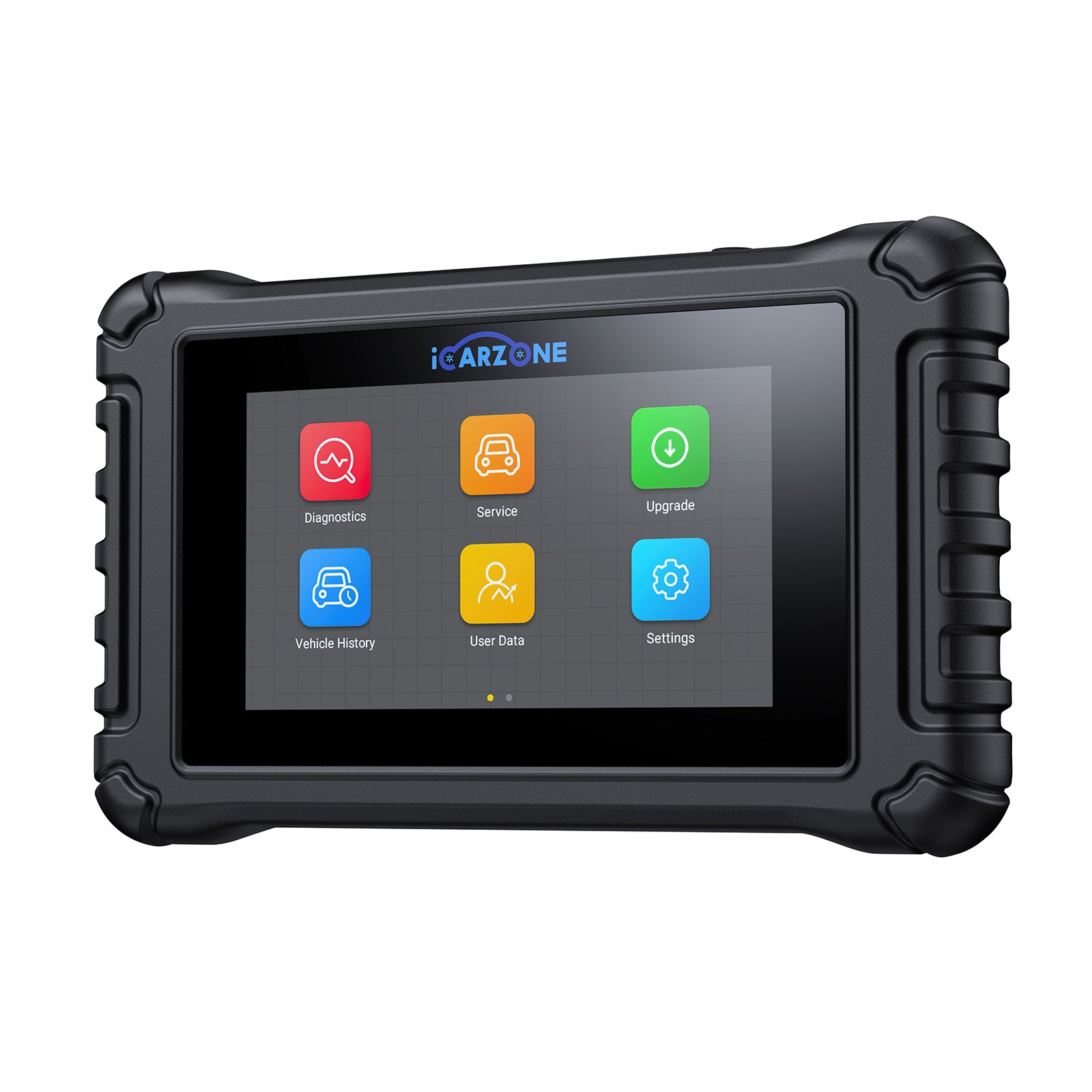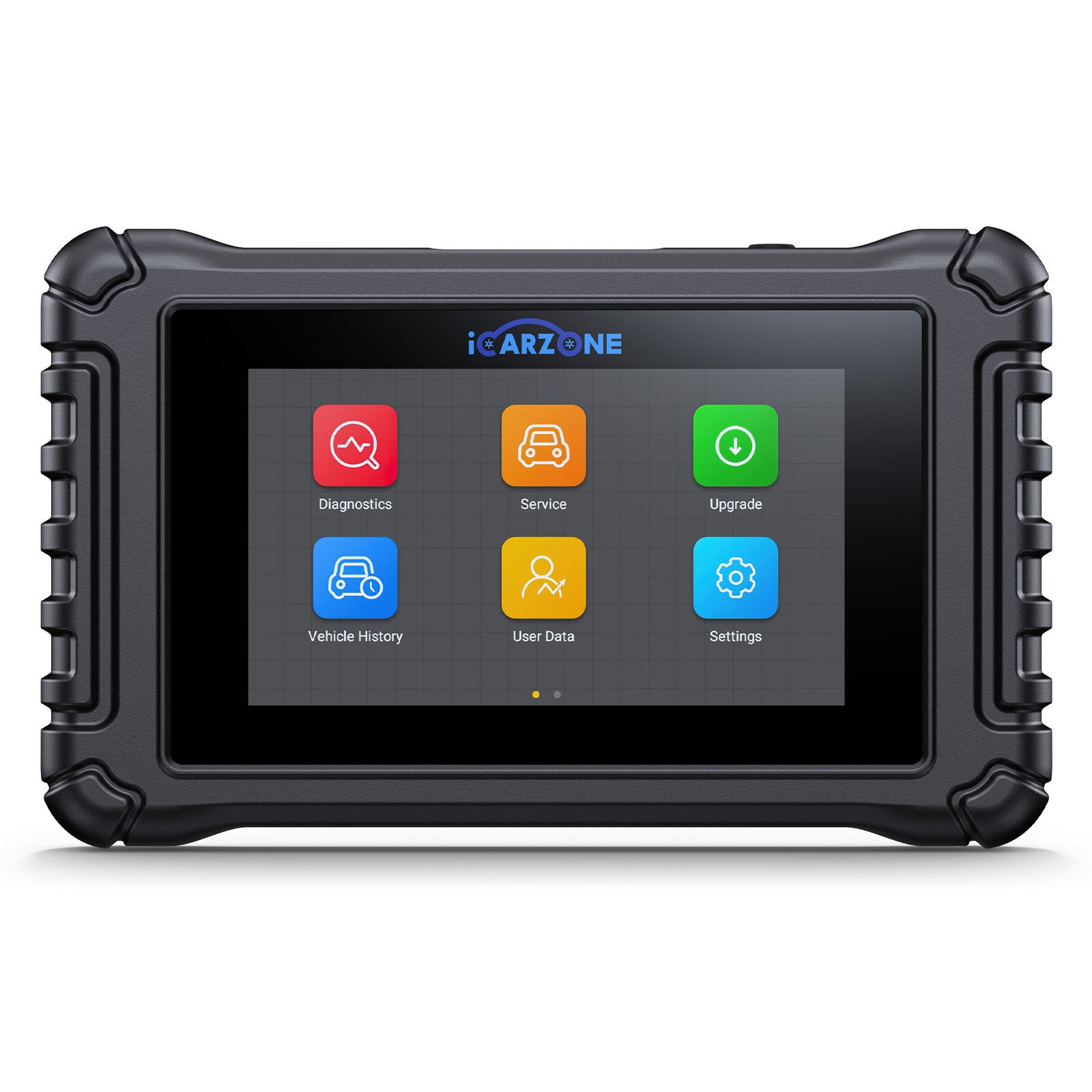

P0132 Code in Toyota Camry: Fix Upstream Oxygen Sensor with ICARZONE MA900

P0132 Code in Toyota Camry: Fix with ICARZONE MA900
Solve upstream oxygen sensor (Bank 1, Sensor 1) issues in 2018-2024 Camry. Diagnose & repair with MA900’s Toyota-specific tools.
Fix P0132 with MA900 Now1. What is P0132 in Toyota Camry?
P0132 is an OBD-II Diagnostic Trouble Code defined as Oxygen Sensor Circuit High Voltage (Bank 1, Sensor 1). For the Toyota Camry—America’s best-selling midsize sedan for over 20 years—this code targets the upstream oxygen sensor: the unit mounted before the catalytic converter (critical for regulating air-fuel mixture).
Camry’s 2.5L Dynamic Force (A25A-FKS) and 3.5L V6 (2GR-FKS) engines rely on this sensor to send real-time voltage signals (0.1V–0.9V) to the Engine Control Unit (ECU). P0132 triggers when the ECU detects voltage above 1.0V for 10+ seconds—signaling a "stuck-rich" condition or sensor failure. This is especially common in 2018-2022 Camrys, as noted in Toyota Technical Service Bulletin (TSB) 21-008.

2. Common Causes in 2018-2024 Camry Models
Failing Upstream Oxygen Sensor (2020 Camry SE 2.5L): A 2020 SE owner with 58,000 miles noticed reduced fuel efficiency. MA900’s Oxygen Sensor Response Test showed voltage stuck at 1.2V (normal: 0.1–0.9V). The sensor’s ceramic element degraded from frequent short trips—common in commuter Camrys. Replacing with OEM sensor #89467-06010 restored normal operation.Wiring Harness Short (2019 Camry XLE 3.5L): A 2019 XLE owner’s P0132 appeared after engine bay cleaning. MA900’s Circuit Continuity Test found a short between the sensor wire and exhaust manifold. The 3.5L’s higher underhood temps melted insulation—repairing with heat-resistant wiring fixed the issue.Corroded Connector (2018 Camry Hybrid LE): A 2018 Hybrid owner in the Pacific Northwest had intermittent P0132. MA900’s Connection Resistance Test showed 15Ω (normal: <0.5Ω) at the sensor plug. Humidity trapped in the hybrid’s tight engine bay caused corrosion—cleaning with contact cleaner and applying dielectric grease resolved it.Fuel Injector Leak (2021 Camry TRD 3.5L): A 2021 TRD owner experienced rough idle with P0132. MA900’s Fuel Injector Balance Test identified a leaking injector on cylinder #1. The 3.5L’s direct injection system flooded the exhaust with fuel—replacing the injector (#23250-0V010) eliminated the high voltage signal.
3. Key Symptoms in Toyota Camry
Performance & Efficiency
- Steady Check Engine Light (not flashing)
- Fuel economy drop (2–4 MPG in 2.5L models)
- Engine hesitation during acceleration
- Rough idle (worse when cold)
- Strong fuel odor from exhaust
System-Specific Signs
- Upstream sensor voltage stuck above 1.0V (via MA900 live data)
- Failed emissions tests (high hydrocarbon levels)
- 2020+ Camrys: "Emissions System Problem" dash message
- Hybrid models: Reduced EV mode activation
- Symptoms worsening in hot weather (sensor overheating)
4. Camry Engines/Trims Prone to P0132
Engine Model Years Camry Trims % of P0132 Cases Primary Risk Factor 2.5L Dynamic Force (A25A-FKS) 2018–2022 LE, SE, XLE, XSE 53% Connector corrosion (TSB 21-008) & heat exposure 3.5L V6 (2GR-FKS) 2018–2024 XLE, XSE, TRD 29% High underhood temps damaging wiring 2.5L Hybrid (A25A-FXS) 2020–2024 Hybrid LE, Hybrid XLE 15% Moisture buildup in tight engine bay 2.5L Dynamic Force (A25A-FKB) 2023–2024 LE, SE, XLE 3% Early ECU calibration issues
5. Diagnostic Steps with ICARZONE MA900
Step Action with MA900 Camry-Specific Goal Pass/Fail Criteria 1 Full System Scan > Select "Toyota" > "Camry" > "Engine Control Unit" Confirm P0132 + check for related codes (P0131, P0133, P0420) Pass: Isolated P0132 | Fail: Multiple codes (signals catalyst damage) 2 Live Data > "Oxygen Sensor Monitoring" Track Bank 1 Sensor 1 voltage at idle + 2,000 RPM Pass: Voltage fluctuates 0.1–0.9V | Fail: Stuck above 1.0V 3 Sensor Tests > "Oxygen Sensor Response Test" Verify sensor reacts to throttle changes (2.5L: test under light load) Pass: Voltage changes within 0.5s | Fail: No response 4 Electrical Tests > "Circuit Continuity Test" Check wiring between sensor and ECU (3.5L: inspect near exhaust manifold) Pass: Continuity present (resistance <5Ω) | Fail: Open/short circuit 5 Service Functions > "Toyota TSB Lookup" Enter Camry’s VIN to check for TSB 21-008 (2018-2022 models) Pass: No relevant TSB | Fail: TSB applies (follow Toyota’s fix)
Case Example: A 2020 Camry SE 2.5L failed Step 2 (voltage stuck at 1.3V) and Step 4 (normal continuity). MA900’s Component Location tool showed the sensor near the exhaust manifold. Replacing the OEM sensor (#89467-06010) and clearing codes with MA900 fixed P0132—confirmed via a 100-mile test drive.

6. Fixes for Camry's P0132
1. Replace Upstream Oxygen Sensor
- Confirm sensor failure via MA900’s Oxygen Sensor Test.
- Locate the sensor (Camry-specific positions):
- 2.5L: Near front exhaust manifold, driver’s side
- 3.5L: Between cylinder heads, near firewall
- Hybrid: Above exhaust manifold (shielded by heat cover)
- Disconnect battery + let exhaust cool (30+ minutes).
- Remove sensor with a 7/8" oxygen sensor socket (use penetrating oil if stuck).
- Install OEM sensor with anti-seize (avoid sensor element):
- 2018–2022 2.5L: #89467-06010
- 2018–2024 3.5L: #89467-33010
- 2020–2024 Hybrid: #89467-06030
- Torque to 30 ft-lbs, reconnect battery, and clear codes with MA900.
2. Repair Wiring Harness (3.5L Models)
- Use MA900’s Circuit Test to find damaged sections (focus near exhaust manifold).
- Replace melted wire with heat-resistant 18-gauge wiring (Toyota-recommended: #82196-12010).
- Install heat shield (#90919-C2007) around the harness to prevent future damage.
- Solder connections + use heat-shrink tubing (125°C rating) for insulation.
- Verify repair with MA900’s continuity test before reassembly.
3. Clean Corroded Connector (2018-2022 2.5L)
- Disconnect the sensor connector (located near the air intake).
- Spray electrical contact cleaner (#08813-80317) into both connector halves.
- Scrub gently with a small brush to remove corrosion.
- Apply dielectric grease (#08853-00080) to pins (per TSB 21-008).
- Reconnect and test with MA900’s Connection Resistance Test.
7. Repair Costs & Maintenance Tips
Camry P0132 repair costs vary by cause—use this table to budget:
| Repair Type | DIY Parts Cost | Professional Repair Cost | Camry Models Affected |
|---|---|---|---|
| Upstream Oxygen Sensor Replacement | $65–$120 (OEM) | $180–$280 (parts + 1hr labor) | All models (2.5L most common) |
| Wiring Harness Repair | $30–$60 (wire + heat shield) | $250–$350 (parts + 1.5hr labor) | 2018–2024 3.5L |
| Connector Cleaning/Repair | $15–$30 (cleaner + grease) | $120–$180 (parts + 1hr labor) | 2018–2022 2.5L (TSB 21-008) |
| Fuel Injector Replacement | $120–$200 per injector (OEM) | $400–$600 per injector (parts + labor) | 2018–2024 3.5L |
| ECU Software Update | $0 (with MA900) | $150–$200 (dealer fee) | 2023–2024 2.5L |
| DIY Diagnosis with MA900 | $0 (one-time tool investment) | $130–$180 (dealer diagnostic fee) | All models |
Maintenance Tips for Camry Owners
- 2018–2022 2.5L Camrys: Clean the upstream sensor connector every 30,000 miles (per TSB 21-008).
- All models: Use only Toyota-recommended oil (0W-20 full synthetic for 2.5L/hybrid, 5W-30 for 3.5L) to prevent sensor contamination.
- 3.5L Camrys: Inspect wiring harness near the exhaust manifold every 20,000 miles for wear.
- Hybrid models: Take monthly highway drives (20+ miles) to dry out moisture in the engine bay.
- Perform MA900’s Oxygen Sensor Health Check quarterly to catch issues early.
8. Preventive Maintenance for Camry
Avoid P0132 in your Camry with these Toyota-recommended steps:
-
Sensor Care:
- Replace upstream sensor every 100,000 miles (preventive for 2.5L models).
- Apply dielectric grease to the connector annually (especially in humid climates).
- For 3.5L: Install an extra heat shield (#90919-C2007) around the sensor wiring.
-
Engine Bay Maintenance:
- Clean the engine bay annually (avoid high-pressure water on sensors).
- Inspect for oil leaks (leaking oil damages sensor elements).
- Secure loose wiring harnesses to prevent contact with hot components.
-
Fuel & Oil Maintenance:
- Use top-tier gasoline (87+ octane for 2.5L, 91+ for 3.5L TRD).
- Change oil every 5,000 miles (2.5L/hybrid) or 7,500 miles (3.5L).
- Replace fuel filter every 60,000 miles to prevent injector leaks.
-
Software Updates:
- Check for ECU updates quarterly with MA900.
- Install TSB-related updates immediately (e.g., 21-008 for 2018-2022 2.5L).
9. Camry-Specific FAQs
Yes, but short-term only. P0132 doesn’t cause immediate damage, but prolonged driving reduces MPG and risks catalytic converter failure (costing $1,200+ to replace). Fix within 1–2 weeks.
Toyota’s 2.5L Dynamic Force engine has a sensor connector prone to corrosion (TSB 21-008). The connector’s location traps moisture, accelerating wear—fixed by annual cleaning with dielectric grease.
We recommend OEM sensors—aftermarket units often fail within 6–12 months. Toyota’s OE sensors are calibrated for the 2.5L/3.5L’s unique exhaust characteristics, ensuring accurate readings.
Yes—MA900 fully supports 2024 Camry Hybrid models, including Toyota’s latest diagnostic protocols for the A25A-FXS hybrid engine and oxygen sensor system.