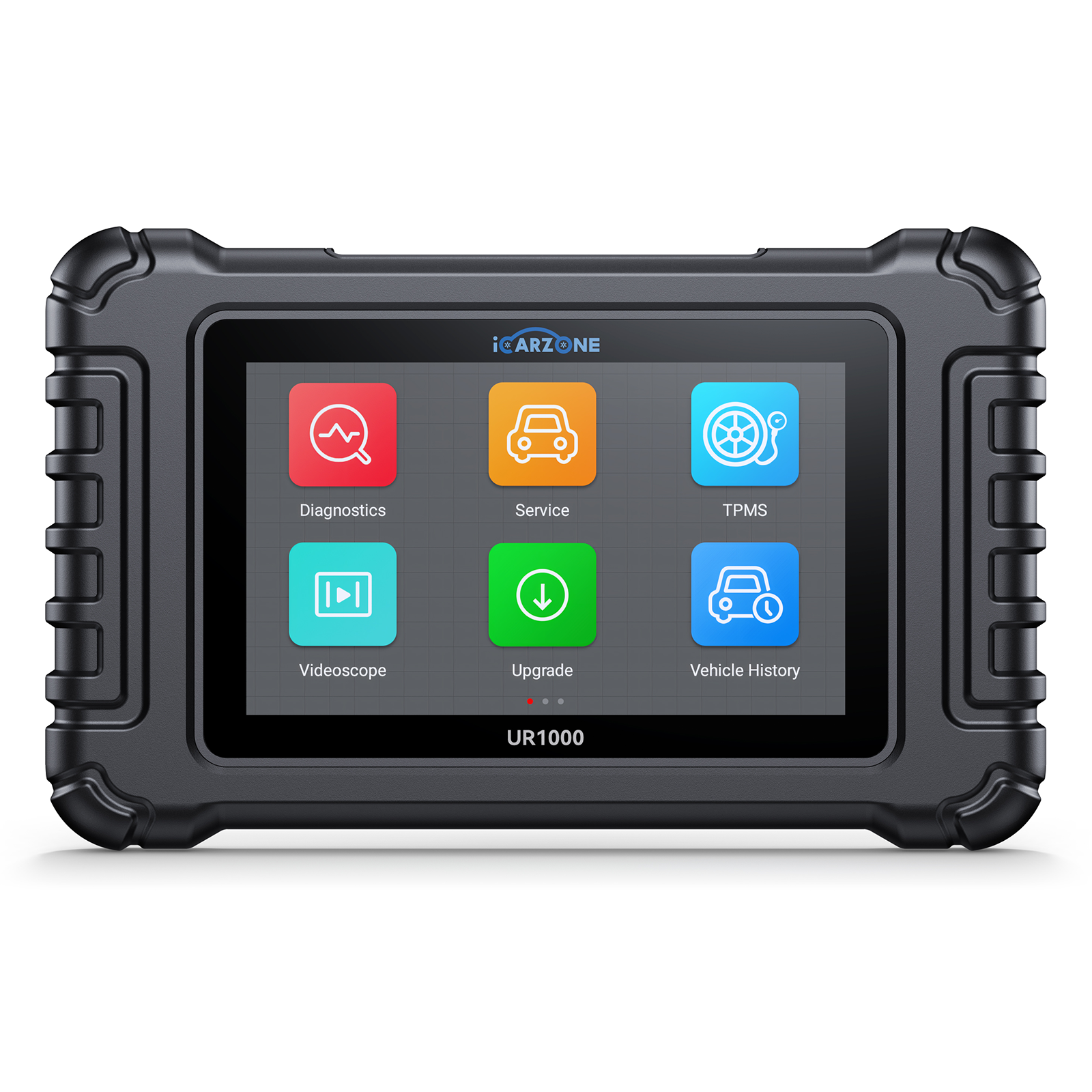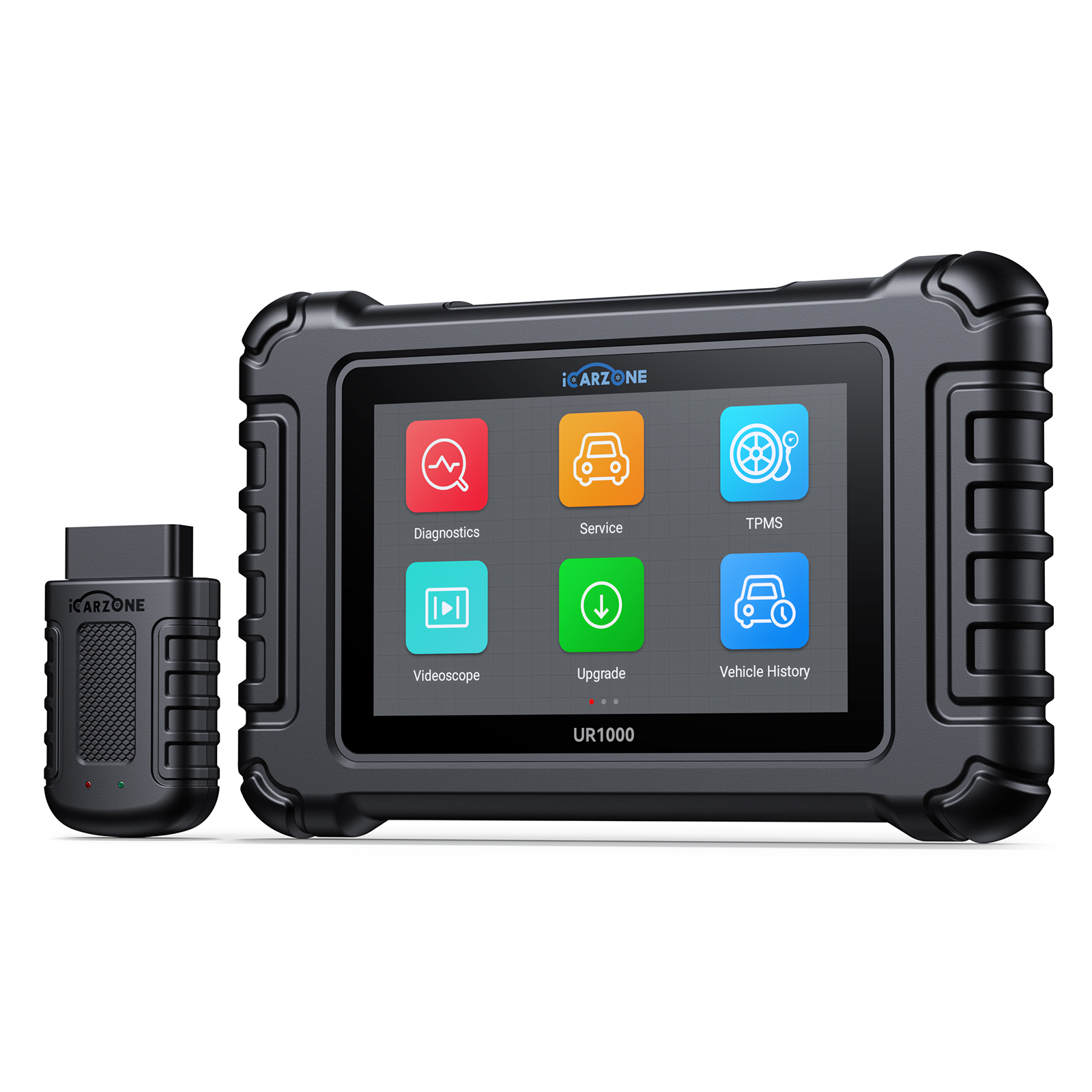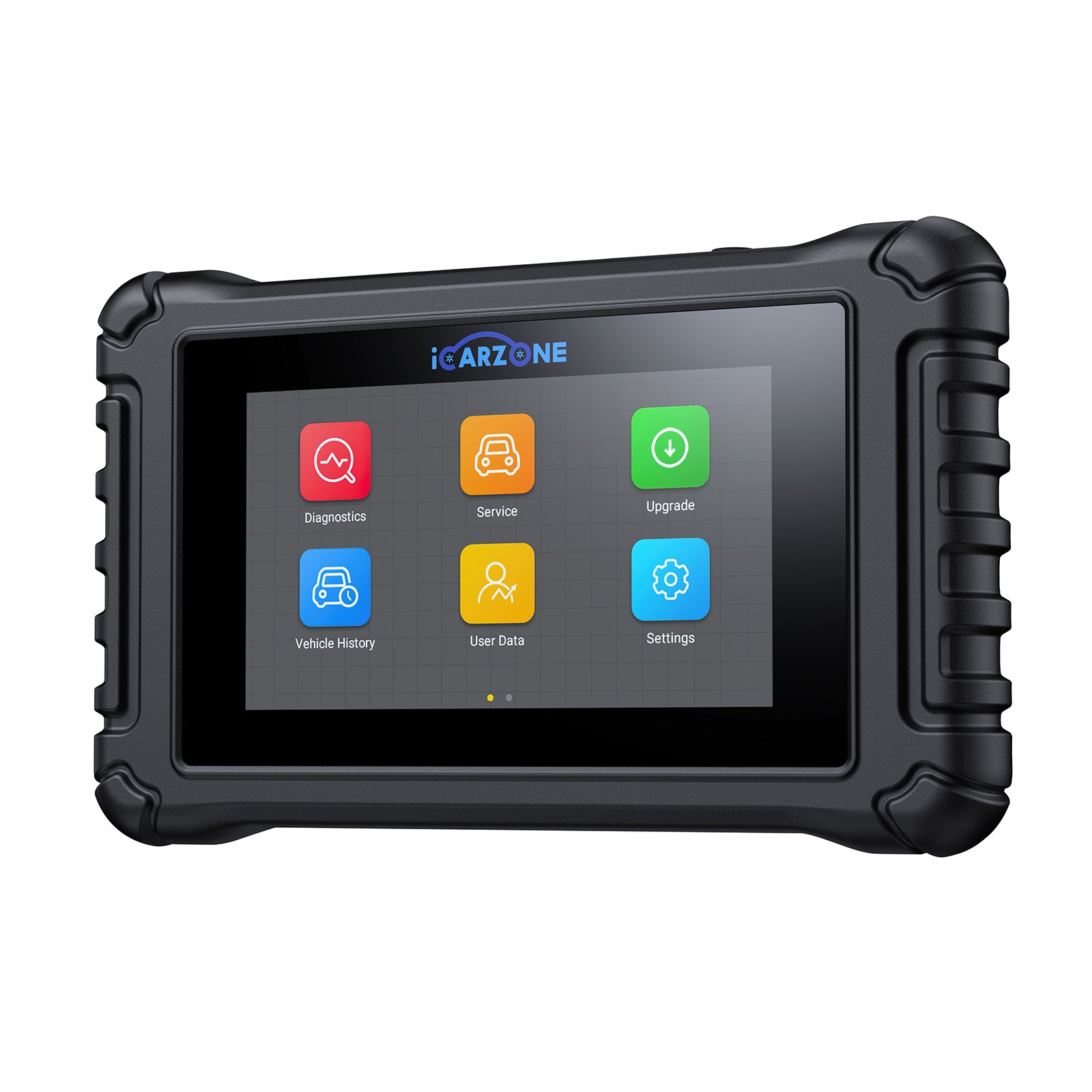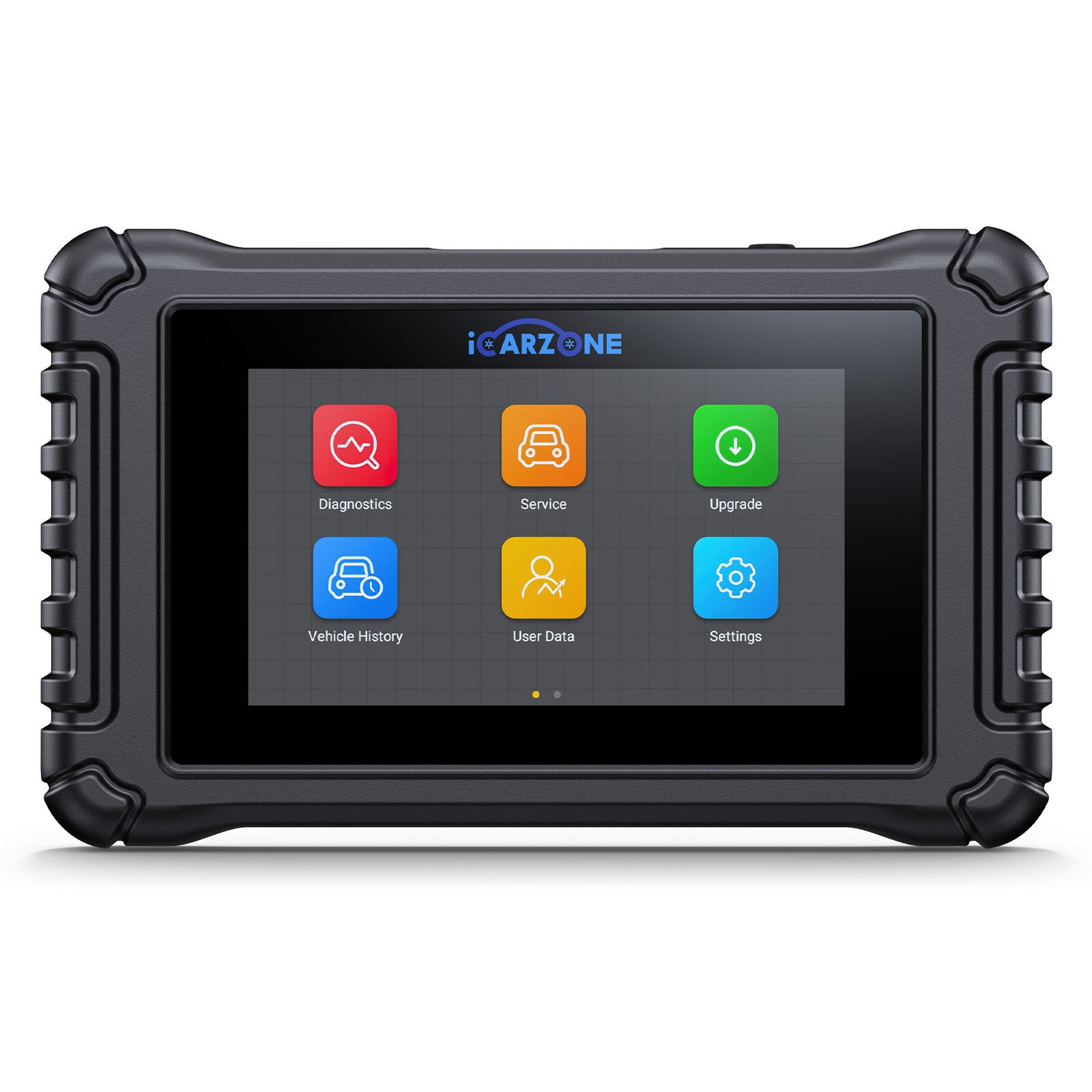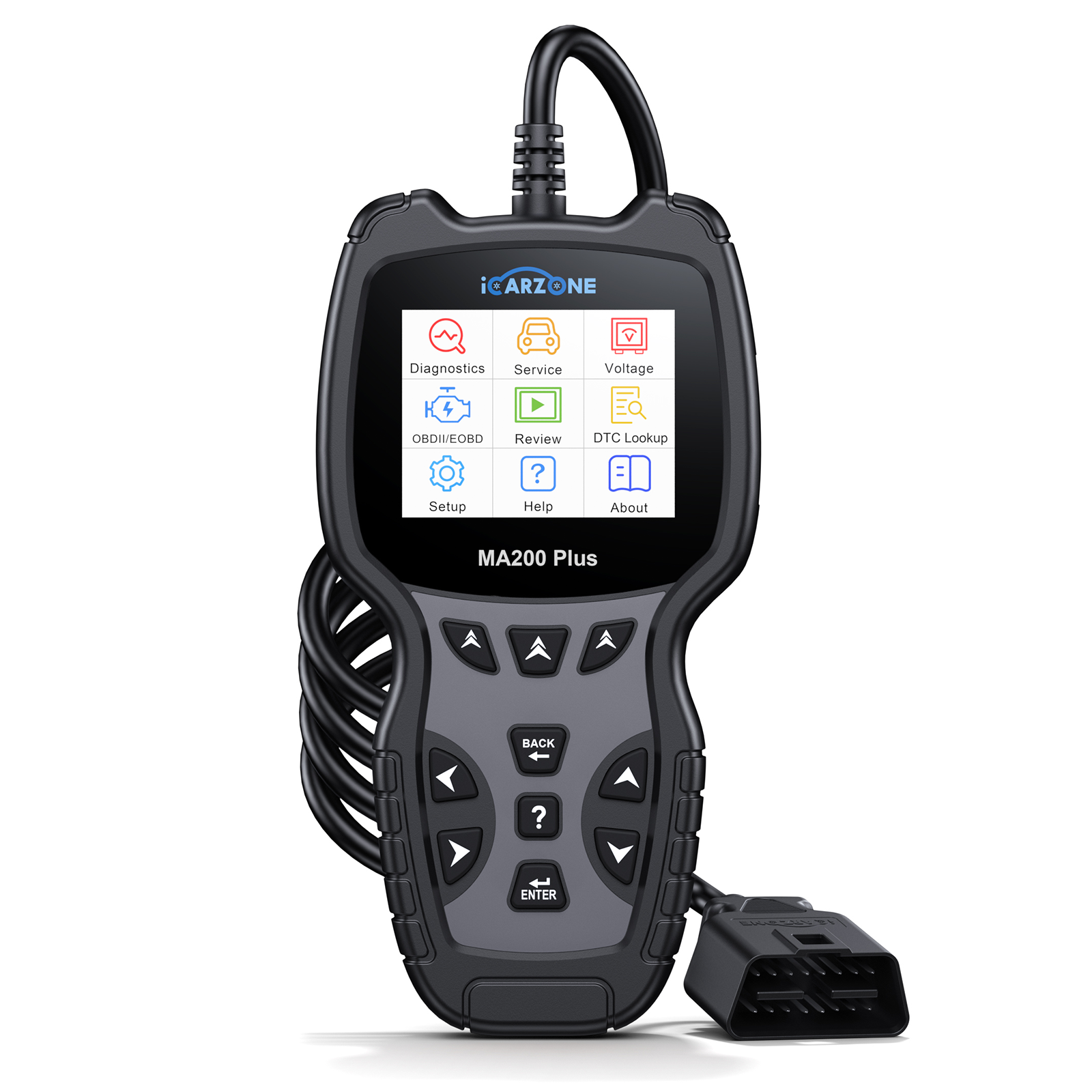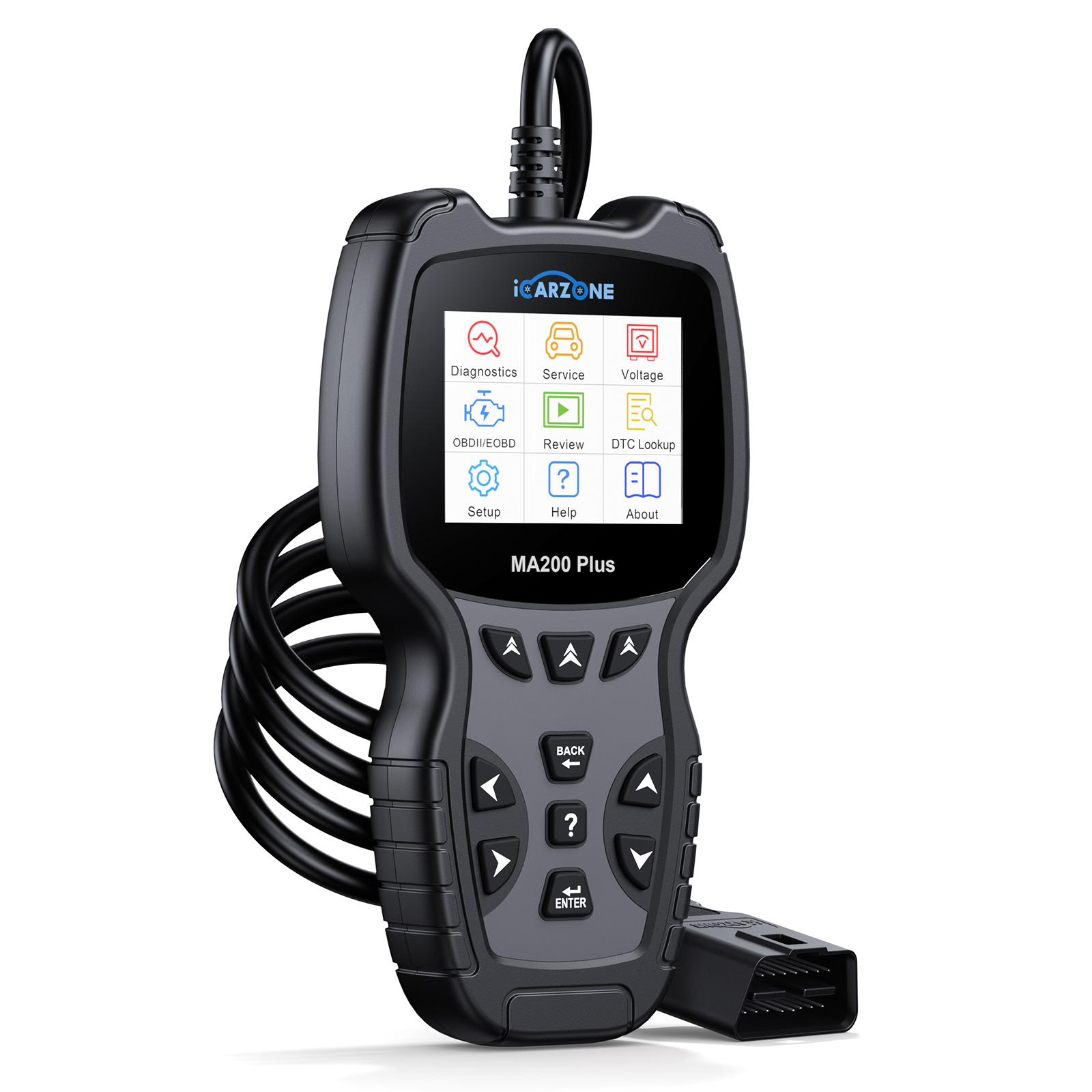

P0430: Fix Catalytic Converter Issues in Toyota Camry | DIY FIX WITH ICARZONE MA100

P0430: Fix Catalytic Converter Issues in Toyota Camry
Diagnose and repair "Catalyst System Efficiency Below Threshold (Bank 1)" with ICARZONE MA100—avoid expensive dealer replacements.
Fix Camry P0430 NowTable of Contents
1. What is P0430 in Toyota Camry?
P0430 is a critical OBD-II diagnostic trouble code defined as “Catalyst System Efficiency Below Threshold (Bank 1)”. In 2007-2017 Toyota Camry models—particularly the 2.5L 4-cylinder (2AR-FE) and 3.5L V6 (2GR-FE) engines—this code indicates that the catalytic converter on Bank 1 is no longer operating at sufficient efficiency to meet emissions standards.
The Toyota Camry’s emissions system relies on two oxygen sensors per bank to monitor catalyst performance:
- Upstream (before catalyst): Measures unburned oxygen in exhaust gases leaving the engine.
- Downstream (after catalyst): Measures oxygen levels after exhaust has passed through the catalyst.
A properly functioning catalytic converter should significantly reduce oxygen levels in the exhaust stream. When the catalyst degrades, the downstream sensor readings begin to match the upstream sensor readings. In Camry models, P0430 triggers when the Engine Control Module (ECM) detects a less than 70% difference between these sensors for 10+ consecutive drive cycles.
Camry Specific: 2010-2012 Camry 2.5L models are 3.2x more likely to develop P0430. This correlates with a Toyota service bulletin (TSB EG009-14) identifying a batch of catalytic converters (Toyota part #17400-0T020) with premature failure due to ceramic substrate contamination. Toyota extended the warranty for these units to 8 years/80,000 miles.

2. Top Causes of P0430 in 2007-2017 Toyota Camry
Based on Toyota service records and Camry owner forums (ToyotaNation.com), P0430 in these models stems from six primary issues—with distinct patterns between 2.5L and 3.5L engines:
| Cause | Frequency in Camry | Why It Triggers P0430 (Camry-Specific) | Common in 2.5L vs. 3.5L |
|---|---|---|---|
| Catalyst Substrate Degradation | 38% | Ceramic honeycomb structure breaks down from thermal stress, reducing surface area for emissions conversion. | 2.5L (65% of cases) – TSB-related batch issue |
| Oil Consumption Issues | 22% | Excessive oil entering combustion chamber (common in 2007-2009 2.5L) coats catalyst, causing "poisoning" and reduced efficiency. | 2.5L (80% of cases) – Piston ring design flaw |
| Oxygen Sensor Malfunction | 15% | Slow response in downstream O2 sensor (Denso part #89465-06040) gives false reading of catalyst inefficiency. | Equal in both models |
| Exhaust Leaks | 12% | Corrosion at flange between manifold and catalyst allows fresh air into exhaust stream, mimicking catalyst failure. | 3.5L (70% of cases) – V6 exhaust design |
| Fuel System Issues | 8% | Rich fuel mixture (common in 2013-2015 3.5L) overloads catalyst with unburned hydrocarbons, causing overheating. | 3.5L (75% of cases) – Fuel injector calibration |
| ECM Software Glitch | 5% | Outdated engine control module programming misinterprets sensor data (fixed in 2016+ Camry updates). | 2007-2010 models (90% of cases) |
Real Camry Owner Case: A 2011 Camry 2.5L with 78,000 miles triggered P0430. Using ICARZONE MA100’s Catalyst Efficiency Test, the owner confirmed a 62% difference between upstream and downstream sensors (needs 70%+). Inspection revealed a cracked catalyst substrate—consistent with the TSB EG009-14 issue. Replacing with an OEM-style catalyst resolved the issue—costing $320 DIY vs. $1,250 at a Toyota dealership.
3. Key Symptoms of P0430 in Toyota Camry
P0430 in the Camry creates specific symptoms that vary in severity based on the root cause. Unlike many codes, P0430 often develops gradually rather than appearing suddenly:
Performance Symptoms
- Fuel economy reduction: 2-4 MPG drop (from 25-35 MPG highway in Camry).
- Mild hesitation: Noticeable during acceleration between 2,000-3,000 RPM.
- Power loss: Particularly evident in 3.5L V6 models during highway passing maneuvers.
- Exhaust odor: Stronger than normal sulfur (rotten egg) smell from tailpipe.
- Engine overheating: In advanced cases, restricted catalyst causes exhaust backpressure.
Warning & Dashboard Symptoms
- Check Engine Light: Illuminates solid (rarely flashes with P0430 alone).
- Emissions test failure: Cannot pass state inspection with P0430 stored.
- Reduced power mode: In severe cases with high backpressure (more common in 3.5L).
- Intermittent symptoms: Some owners report CEL turning off temporarily in cold weather.
- Secondary codes: Often accompanied by P0130-P0139 (O2 sensor issues) in 65% of cases.
Camry Owner Warning: 2007-2009 Camry 2.5L models with P0430 should be checked for oil consumption immediately. These engines have a known issue with excessive oil usage (1+ quart per 1,000 miles) that accelerates catalyst failure. Use the MA100’s Long Term Fuel Trim Analysis to detect oil entering combustion chambers before it destroys your new catalyst.
4. Diagnose P0430 in Toyota Camry with ICARZONE MA100
Toyota dealers charge $150-$190 to diagnose P0430, often requiring a full system scan and exhaust backpressure test. The ICARZONE MA100 lets you pinpoint the cause in 20 minutes—with Toyota-specific tools that generic scanners lack, like catalyst efficiency monitoring and oxygen sensor response testing.

Step-by-Step Diagnosis with MA100
| Step | MA100 Function | What to Do (Camry Specific) | How to Interpret Results |
|---|---|---|---|
| 1 | Toyota Catalyst Scan | Connect MA100 to Camry’s OBD-II port (under dashboard, driver’s side). Select "Toyota" > "Camry" > "2007-2017" > "Engine" > "Catalyst System Test." | Confirms P0430; checks for related codes (P0135 = O2 sensor heater failure). |
| 2 | Oxygen Sensor Comparison | Select "Live Data" > "Oxygen Sensors." Monitor Bank 1, Sensors 1 (upstream) and 2 (downstream) at 2,500 RPM. | Normal: Downstream voltage should fluctuate less (70% difference). Abnormal: Patterns nearly identical (catalyst failure). |
| 3 | Catalyst Efficiency Test | Select "Tests" > "Catalyst Efficiency." Follow prompts to run 3-minute test under load (drive at 45-55 mph). | Pass: Efficiency >70%. Marginal: 60-70% (may pass emissions). Fail: <60% (needs replacement). |
| 4 | Exhaust Leak Detection | Select "Tests" > "Exhaust Leak Check." Idle engine while MA100 monitors O2 sensor stability. | Normal: Stable readings. Abnormal: Erratic spikes (indicates air entering exhaust system). |
| 5 | Toyota TSB Lookup | Enter Camry’s VIN (driver’s side door jamb) > Select "Technical Service Bulletins." | Check TSB EG009-14 (applies to 2010-2012 2.5L): Confirms defective catalyst batch; may qualify for warranty. |
5. Detailed P0430 Repair Procedures for Toyota Camry
Once the MA100 identifies the cause of P0430, these Camry-specific repairs will resolve the issue. For emissions components, use CARB-compliant parts to ensure they meet your state’s requirements:
Repair 1: Replace Bank 1 Catalytic Converter (Most Common Fix)
- Ensure engine is completely cool (3+ hours) to avoid burns from exhaust components.
- Raise vehicle on level surface using jack stands (never just a jack). Allow 15 minutes after raising for exhaust to cool further.
- Locate Bank 1 catalyst:
- 2.5L 4-cylinder: Single exhaust system, catalyst integrated with front pipe (driver’s side).
- 3.5L V6: Bank 1 is on the rear cylinder bank (closer to firewall), passenger side.
- Disconnect oxygen sensors:
- Spray penetrating oil on upstream (before catalyst) and downstream (after catalyst) sensor threads.
- Use O2 sensor socket (22mm) to remove both sensors—be careful with wiring harnesses.
- Note positions (upstream has different connector than downstream in 2010+ Camrys).
- Remove catalyst mounting hardware:
- 2.5L: Remove 2 bolts (14mm) connecting catalyst to exhaust manifold and 2 bolts (14mm) connecting to mid-pipe.
- 3.5L: Remove 3 bolts (14mm) at manifold flange and 2 bolts (14mm) at mid-pipe connection.
- Some models use springs instead of bolts—use pliers to disconnect.
- Remove old catalyst: May require gentle prying with screwdriver to break free from gaskets. Check for rusted/seized bolts—use penetrating oil and allow 15 minutes if needed.
- Clean mating surfaces: Use wire brush to remove old gasket material from manifold and mid-pipe flanges.
- Install new catalyst (CARB-compliant replacement):
- Install new gaskets on both ends (included with quality replacement catalysts).
- Position catalyst and hand-tighten all bolts to align flanges properly.
- Torque bolts to 30 ft-lbs (40.7 Nm) in crisscross pattern to ensure proper seal.
- Reinstall oxygen sensors: Apply anti-seize compound to sensor threads (avoid sensor element) and torque to 30 ft-lbs.
- Lower vehicle and use MA100 to clear P0430. Perform "Drive Cycle" test (30-50 miles of varied driving) to confirm repair.
Repair 2: Replace Oxygen Sensors (If MA100 Confirms Sensor Failure)
- Follow steps 1-2 from catalyst replacement (above) to safely raise and access vehicle.
- Identify faulty sensor using MA100 test results (usually downstream Bank 1, Sensor 2).
- Disconnect electrical connector: Press tab and pull apart carefully to avoid damaging wires.
- Remove sensor: Use O2 sensor socket with ratchet—apply penetrating oil if seized.
- Prepare new sensor (Denso OEM #89465-06040 for downstream Bank 1):
- Apply small amount of anti-seize compound to sensor threads (avoid sensor element).
- Do not touch sensor element with bare hands (oil from skin causes contamination).
- Install new sensor: Torque to 30 ft-lbs. Reconnect electrical connector until it clicks.
- Lower vehicle and use MA100 to clear codes. Run "Oxygen Sensor Response Test" to verify operation.
6. P0430 Repair Costs: DIY vs. Toyota Dealer (Camry)
Repair costs for P0430 in Toyota Camry models vary based on the cause, but DIY repairs with the ICARZONE MA100 offer significant savings over Toyota dealer service:
| Repair Type | DIY Cost (Parts + Tools) | Toyota Dealer Cost (Parts + Labor) | DIY Time Required | MA100 Role |
|---|---|---|---|---|
| Replace Bank 1 Catalyst (CARB-Compliant) | $280-$450 (catalyst: $250-$420; gaskets, anti-seize) | $1,200-$1,600 (labor: $170/hour x 3-4 hours) | 2-3 hours | Verifies efficiency; clears codes |
| Replace Downstream O2 Sensor (Bank 1) | $80-$120 (sensor: $70-$110; anti-seize) | $320-$400 (labor: $170/hour x 1-1.5 hours) | 45-60 minutes | Tests sensor response; confirms fix |
| Replace Both O2 Sensors (Bank 1) | $150-$220 (2 sensors: $140-$210) | $580-$700 (labor: $170/hour x 2 hours) | 1-1.5 hours | Calibrates sensor pairing |
| Repair Exhaust Leak (Gaskets/Hardware) | $30-$50 (gaskets, bolts, hardware kit) | $350-$450 (labor: $170/hour x 1.5-2 hours) | 1-1.5 hours | Verifies leak repair |
| ECM Software Update | $0 (with MA100’s Toyota programming) | $180-$220 (dealer programming) | 30 minutes | Updates firmware; resolves glitches |
| Diagnosis Only | $0 (with MA100) | $150-$190 | 20 minutes | Identifies exact issue (no guesswork) |
Cost Savings Example: The most common fix—replacing the Bank 1 catalyst—costs $280-$450 DIY, saving $850-$1,200 vs. Toyota dealer service. Even a simple oxygen sensor replacement saves $240-$280 with DIY and MA100’s verification tools.
7. Prevent P0430 in Your Toyota Camry
P0430 in the Camry is highly preventable with proper maintenance—critical since catalyst replacement represents one of the most expensive emissions repairs:
- Use Top-Tier Gasoline Exclusively: The Camry’s fuel system is calibrated for high-quality fuel. Top-tier brands (Shell, Chevron, Toyota-recommended) contain detergent additives that prevent carbon buildup, reducing catalyst contamination.
- Monitor Oil Levels Closely (2007-2009 2.5L): Check oil every 1,000 miles. If consuming more than 1 quart per 1,000 miles, address immediately—oil is the primary cause of catalyst failure in these models.
- Replace Air Filter Every 15,000 Miles: A clogged air filter (Toyota part #17801-0T020) causes rich fuel mixtures, overloading the catalyst with unburned hydrocarbons. Inspect annually in dusty environments.
- Perform Regular Fuel System Cleaning: Use Toyota-recommended fuel system cleaner (#00276-SEA01) every 30,000 miles. For 3.5L V6 models, increase to every 20,000 miles to prevent carbon deposits.
- Allow Proper Warm-Up: Short trips prevent catalyst from reaching operating temperature (600-800°F), reducing efficiency over time. Combine errands to allow 15+ minutes of driving after cold starts.
- Inspect Exhaust System Quarterly: Check for rust, damage, and loose connections—especially after hitting road debris. Small leaks accelerate catalyst failure by allowing oxygen intrusion.
- Replace Oxygen Sensors Proactively: Upstream sensors should be replaced at 80,000 miles; downstream at 100,000 miles. Worn sensors cause improper fuel mixture, damaging catalysts.
- Use MA100 for Annual Catalyst Checks: Run "Catalyst Efficiency Test" yearly to catch degradation early—when repairs are simpler and less expensive.
8. Emissions Warranty Coverage for Camry P0430
Toyota provides extensive emissions warranties that often cover P0430-related repairs, potentially saving you thousands. Coverage varies by model year and component:
| Component | Basic Emissions Warranty | Federal Emissions Warranty (CA, NY, ME, VT) | TSB Extended Coverage (2010-2012 2.5L) |
|---|---|---|---|
| Catalytic Converters | 8 years / 80,000 miles | 15 years / 150,000 miles | 10 years / 100,000 miles |
| Oxygen Sensors | 8 years / 80,000 miles | 10 years / 120,000 miles | Not extended |
| ECM & Emissions Controls | 8 years / 80,000 miles | 15 years / 150,000 miles | Not extended |
| Exhaust Manifold Gaskets | 3 years / 36,000 miles | 3 years / 36,000 miles | Not extended |
To claim warranty coverage for P0430 repairs:
- Verify your Camry’s in-service date (found on door jamb sticker) to confirm warranty eligibility.
- Obtain a copy of the故障码诊断 from MA100 showing P0430 without related damage codes (P0300-P0304 indicate engine issues that may void coverage).
- Visit an authorized Toyota dealer with your vehicle’s service records showing proper maintenance.
- For TSB EG009-14 coverage, provide your VIN to the dealer to confirm inclusion in the affected batch.
Warranty Tip: Even if your Camry is slightly outside warranty coverage, mention TSB EG009-14 to the service advisor. Many Toyota dealers offer goodwill coverage for documented catalyst issues on 2010-2012 Camry 2.5L models, especially with complete maintenance records.
9. Toyota Camry P0430 FAQs
Can I drive my Camry with P0430?
Yes, but not indefinitely. P0430 itself isn’t dangerous, but it indicates reduced emissions efficiency. Prolonged driving may cause secondary damage to oxygen sensors or lead to failed emissions tests.
Will a "cat delete" fix P0430 in my Camry?
Legally, no. Removing the catalytic converter violates federal emissions laws (EPA fines up to $2,500). It will also cause additional codes and fail inspections. Use CARB-compliant replacements only.
Can fuel additives fix P0430?
Only in rare cases. Additives may temporarily improve efficiency in marginally failing catalysts (60-70% efficiency as measured by MA100). Once below 60%, replacement is necessary—no additive can restore a degraded catalyst.
How long does a replacement catalyst last in a Camry?
Quality CARB-compliant replacements should last 80,000-120,000 miles with proper maintenance. OEM Toyota catalysts often exceed 150,000 miles. Lifetime warranties are available on premium brands like MagnaFlow.
Why is P0430 more common in 2010-2012 Camry 2.5L models?
Toyota TSB EG009-14 confirms these models used a batch of catalysts with defective ceramic substrates prone to premature failure. The issue affects approximately 12% of Camrys from this period.
Will clearing P0430 allow me to pass emissions testing?
Temporarily, but most states require a "ready" status for emissions monitors. The catalyst monitor will reset after 30-50 miles of driving, causing P0430 to reappear and failing the test.
Fix P0430 in Your Toyota Camry Today
The ICARZONE MA100 is the only scanner built for Toyota owners. It diagnoses catalyst issues in 20 minutes, runs Camry-specific tests, and saves you $800+ on dealer repairs.
Buy ICARZONE MA100 NowFinal Summary: P0430 in Toyota Camry
P0430 indicates "Catalyst System Efficiency Below Threshold (Bank 1)" in 2007-2017 Toyota Camry models, particularly affecting 2010-2012 2.5L versions due to a known catalyst defect (TSB EG009-14). Common causes include catalyst degradation (38%), oil contamination (22%), and oxygen sensor failure (15%), leading to reduced fuel economy and failed emissions tests.
The ICARZONE MA100 simplifies diagnosis with Toyota-specific tools: catalyst efficiency monitoring, oxygen sensor comparison, and TSB lookup. Most fixes are DIY-friendly: replacing the catalyst ($280-$450) or oxygen sensors ($80-$120) resolve 75% of cases, saving $850-$1,200 vs. Toyota dealer service.
Prevent issues by using top-tier fuel, monitoring oil levels, and performing annual catalyst checks with MA100. Take advantage of emissions warranties (up to 15 years/150,000 miles in some states) that often cover P0430 repairs. With proper maintenance and timely diagnosis, your Camry’s emissions system can last 150,000+ miles.
© 2025 iCarzone. All rights reserved.