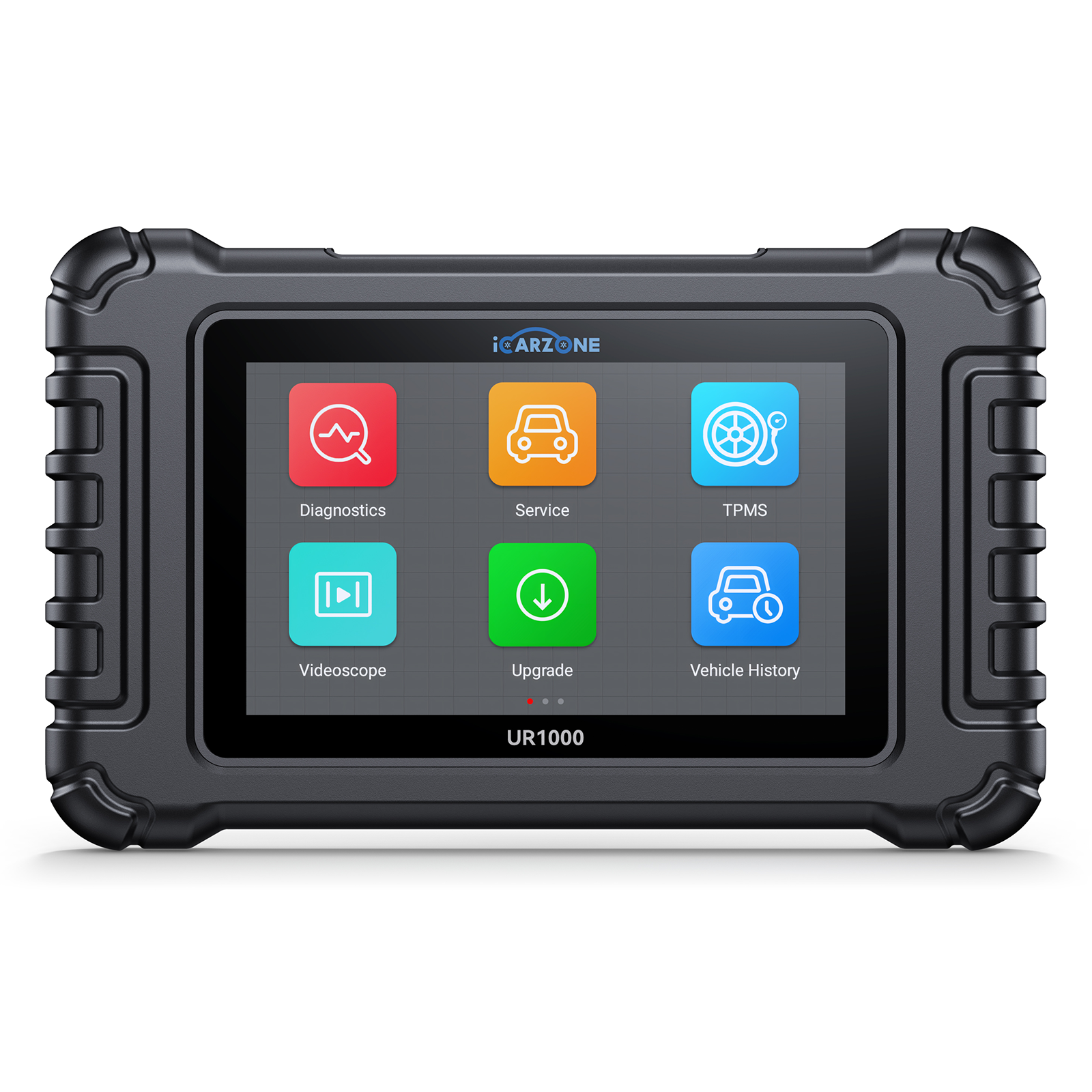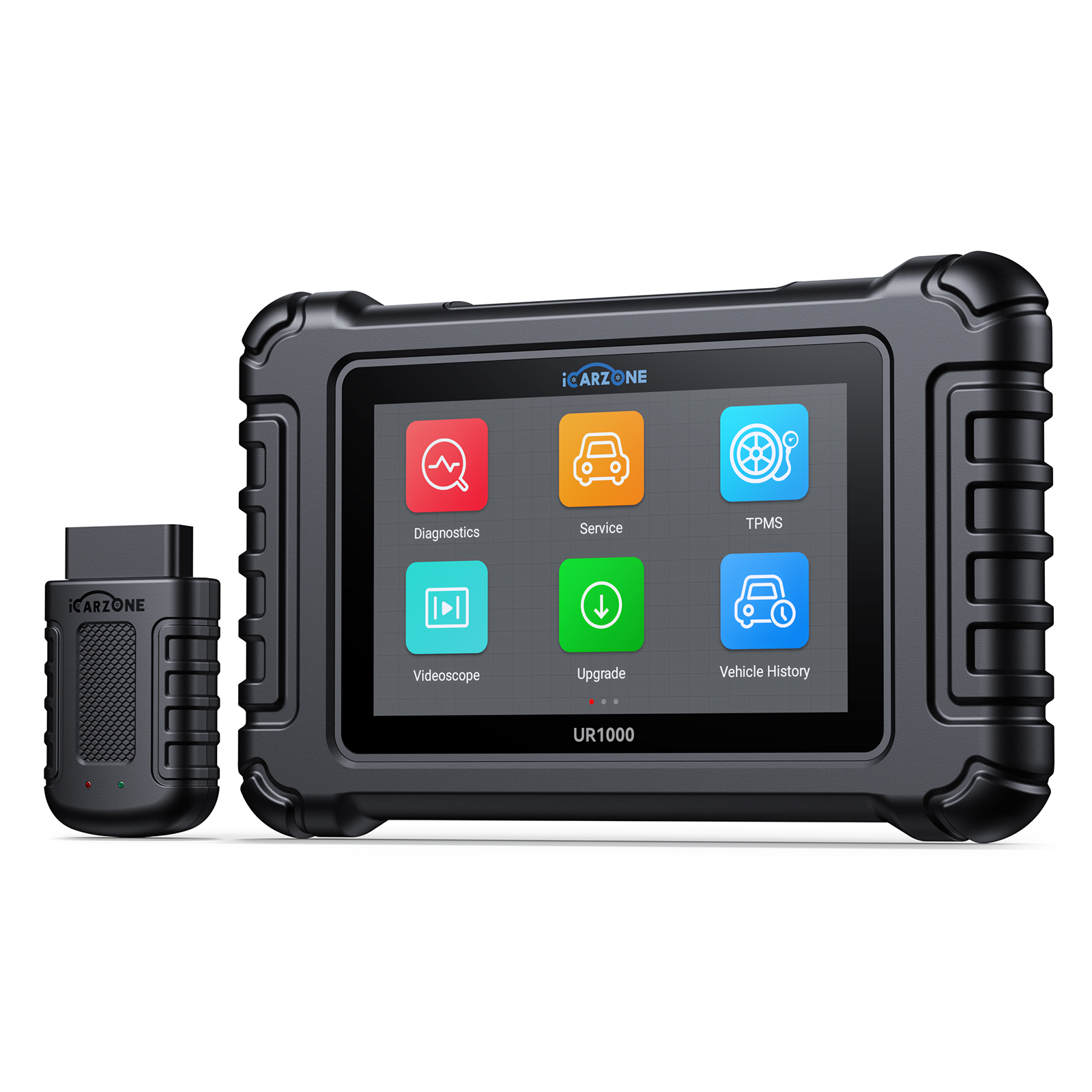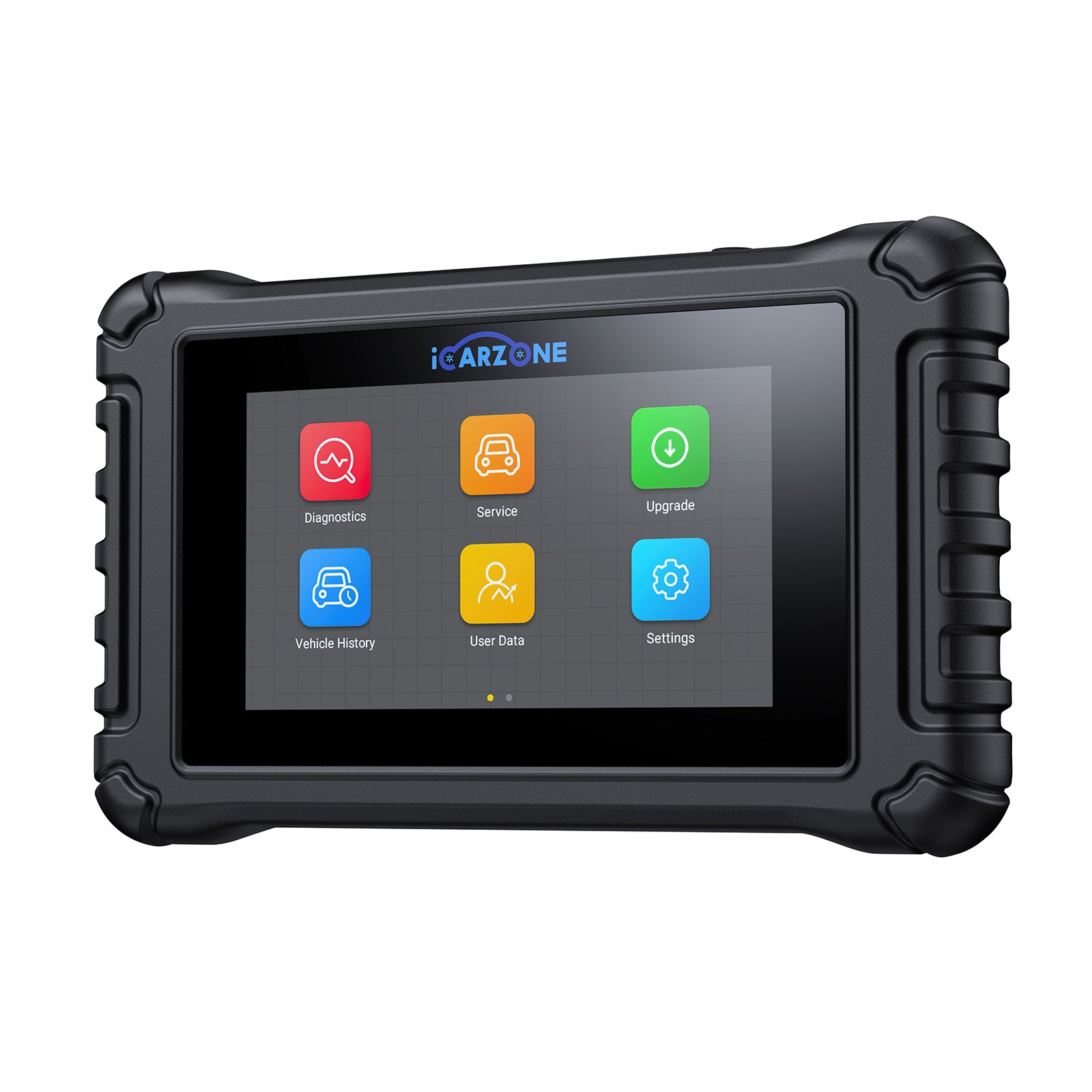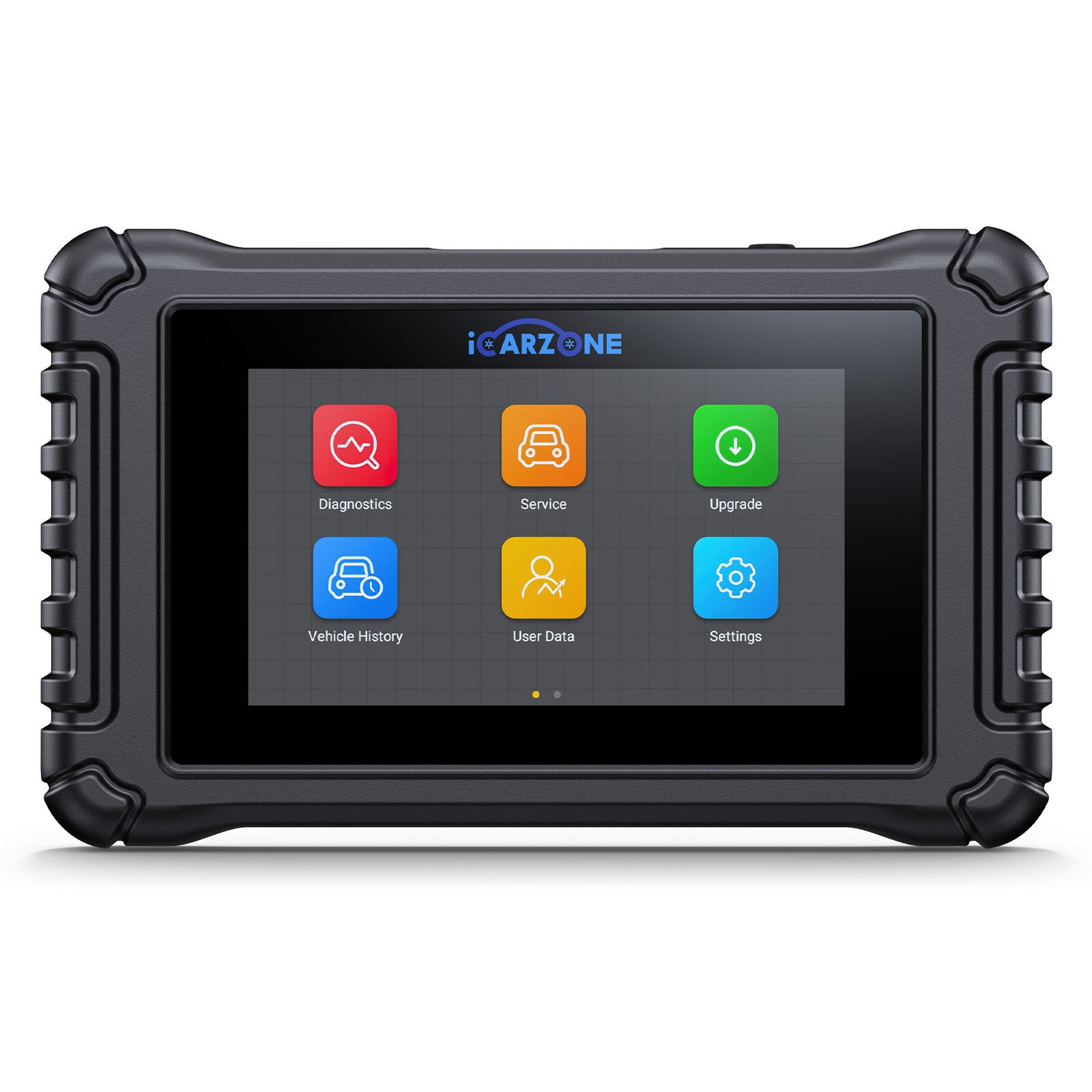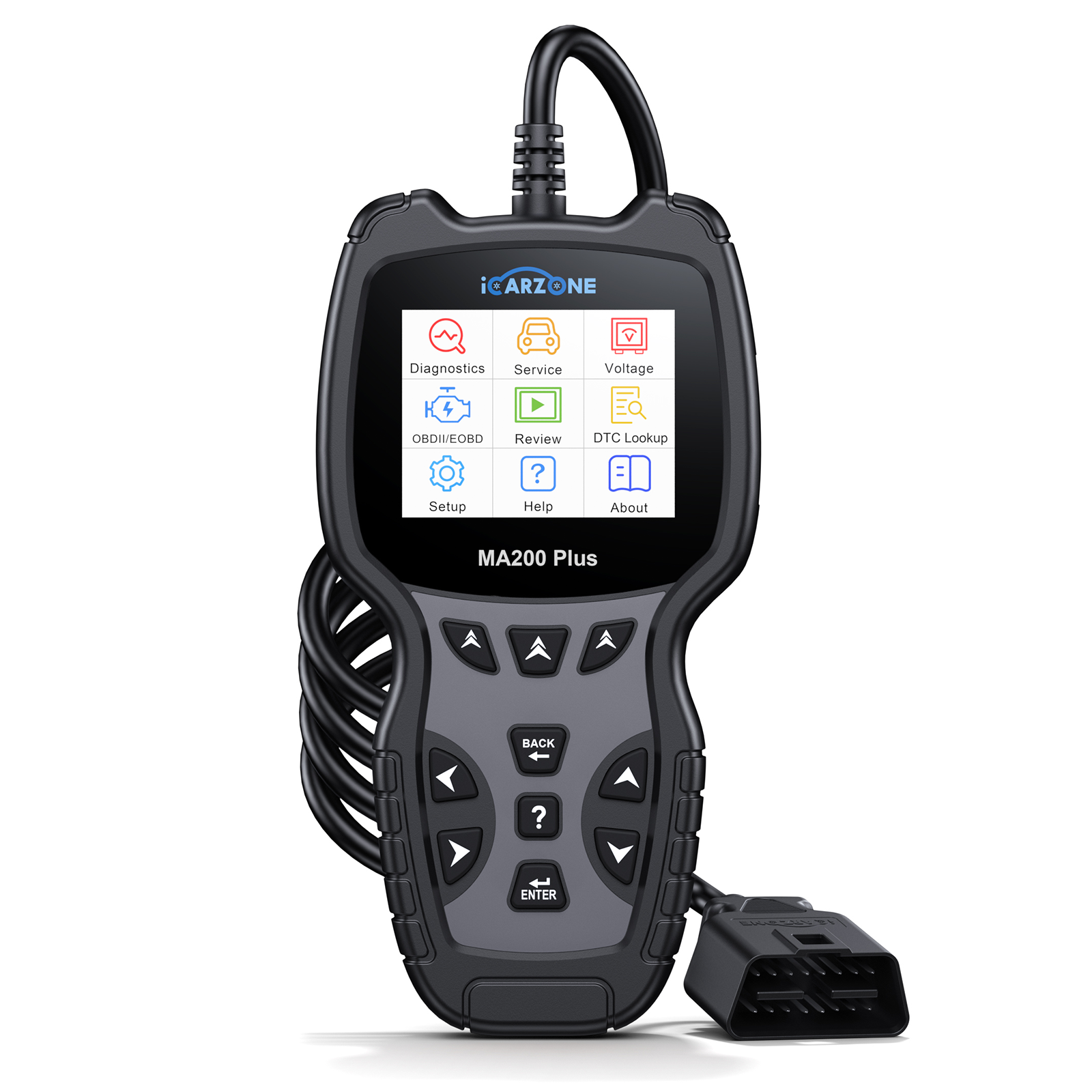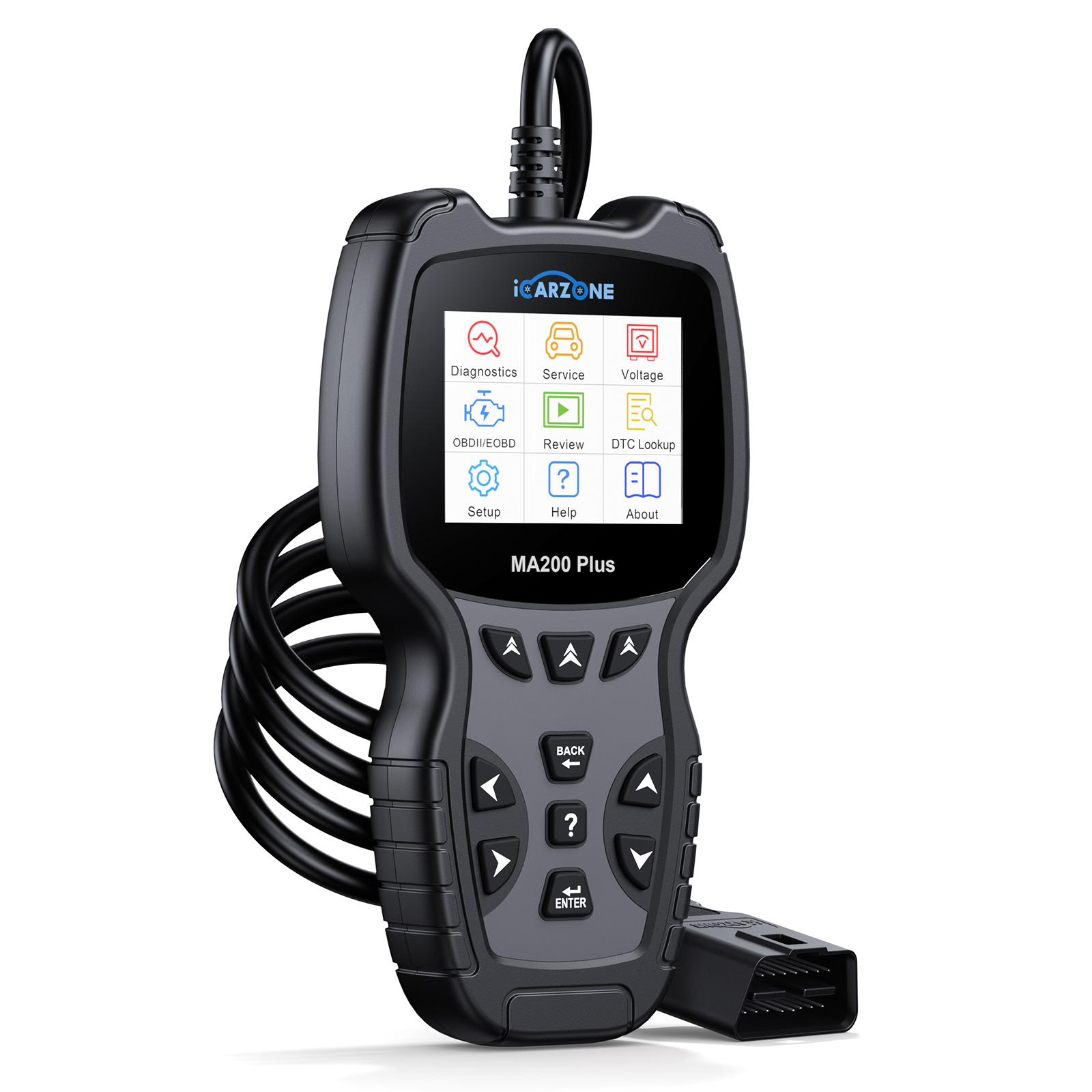

P0446 Code in Toyota Camry: Fix EVAP Issues with ICARZONE MA100 (DIY Solution)

Solve EVAP system issues in 2018-2024 Camry 2.5L & 3.5L models. Diagnose and repair vent control problems easily with MA100.
Fix P0446 with MA100 Now1. What is P0446 in Toyota Camry?
P0446 is an OBD-II Diagnostic Trouble Code indicating an Evaporative Emission Control System Vent Control Circuit Malfunction. In Toyota Camry—America's best-selling sedan for decades—this code points to issues with the EVAP system that captures and recycles fuel vapors from the gas tank.
The Camry's EVAP system includes several key components working together to prevent fuel vapors from escaping into the atmosphere: a charcoal canister, vent valve solenoid, purge valve, gas cap, and associated hoses. P0446 specifically indicates a problem with the vent control circuit that regulates air flow into the charcoal canister.

Why P0446 Matters for Camry Owners
Toyota engineered the Camry's EVAP system to meet strict emissions standards while maintaining fuel efficiency. When P0446 occurs:
- Check Engine Light illuminates, potentially masking other important codes
- Fuel efficiency decreases by 1-2 MPG due to improper vapor recycling
- Vehicle may fail emissions tests in states like California, New York, and Massachusetts
- Extended operation can damage the purge valve solenoid ($150+ replacement)
- 2020+ Camry models may enter reduced power mode to protect emissions components
2. Common Causes in 2018-2024 Toyota Camry
Failed Vent Valve Solenoid (2020 Camry LE 2.5L) — A 2020 LE owner with 42,000 miles developed P0446 after winter. ICARZONE MA100's EVAP Solenoid Test showed no response from the vent valve. Inspection revealed corrosion on the electrical connector—common in Camrys exposed to road salt. Replacing the solenoid (Toyota #90910-C2007) resolved the issue.Clogged EVAP Vent Tube (2019 Camry XSE 3.5L) — A 2019 XSE owner's P0446 appeared after off-road parking. MA100's Smoke Test Simulation indicated restricted airflow. The vent tube (located near the rear bumper) was found clogged with mud and debris—a known vulnerability in Camry's EVAP system placement.Damaged Charcoal Canister (2021 Camry SE 2.5L) — A 2021 SE owner experienced persistent P0446. MA100's EVAP Leak Test identified a large leak. Inspection showed rodent damage to the charcoal canister—Camry's canister is positioned in a wheel well, making it susceptible to animal intrusion in some regions.Wiring Harness Issues (2018 Camry XLE 3.5L) — A 2018 XLE owner had intermittent P0446. MA100's Circuit Test revealed high resistance in the vent valve wiring. Toyota service records show this is common in early 2018 models due to a wiring harness routing issue that causes chafing over time.PCM Software Glitch (2022 Camry Hybrid LE) — A 2022 Hybrid owner's P0446 appeared without mechanical issues. MA100's TSB Lookup identified Toyota TSB EG055-22, which addresses false P0446 triggers in hybrid models. Updating the PCM software cleared the code.

3. Key Symptoms in Toyota Camry Sedans
Primary Symptoms
- Illuminated Check Engine Light (CEL) with P0446 stored
- "Check EVAP System" message on multi-information display (2020+ models)
- Decreased fuel efficiency (1-2 MPG reduction reported by owners)
- Difficulty refueling (tank may click off repeatedly during filling)
- Occasional hissing sound from rear of vehicle when tank is full
Secondary Indicators
- Strong fuel odor near rear of vehicle (especially in hot weather)
- Intermittent rough idle when engine is cold
- Hybrid models may show reduced EV mode operation
- 2022+ models may enter "Emissions Protection Mode" with reduced acceleration
- Failed state emissions inspection (common in OBD-II test states)
4. Camry Engines/Trims Prone to P0446
Toyota service data highlights these Camry configurations with highest P0446 incidence:
| Engine | Model Years | Camry Trims | % of P0446 Cases | Primary Risk Factor |
|---|---|---|---|---|
| 2.5L Dynamic Force I4 | 2018–2021 | LE, SE, XLE | 38% | Vent valve solenoid corrosion and wiring issues |
| 3.5L V6 | 2018–2024 | XLE, XSE, TRD | 27% | Higher EVAP system pressure leading to accelerated wear |
| 2.5L Hybrid | 2020–2024 | LE Hybrid, XLE Hybrid | 22% | Software calibration issues and sensitive EVAP monitoring |
| 2.5L Dynamic Force I4 | 2022–2024 | LE, SE, XLE, XSE | 10% | Improved design but still susceptible to vent tube clogging |
| 3.5L V6 TRD | 2020–2024 | TRD | 3% | Aggressive driving style affecting EVAP system components |
Critical TSBs for Camry P0446:
- Toyota TSB EG055-22 (2020–2022 Camry Hybrid): PCM update to resolve false P0446 detection.
- Toyota TSB EG055-19 (2018–2019 Camry): Vent valve solenoid replacement and wiring harness inspection.
- Toyota TSB EG024-21 (2020–2021 Camry): Revised EVAP vent tube to prevent clogging.
5. Diagnostic Steps with ICARZONE MA100
Diagnosing P0446 in your Camry is precise with ICARZONE MA100's Toyota-specific EVAP tools:
| Step | Action with MA100 | Camry-Specific Goal | Pass/Fail Criteria |
|---|---|---|---|
| 1 | Full System Scan > Select "Toyota" > "Camry" > "Engine Control Module" | Confirm P0446 and check for related codes (P0440, P0441, P0455) | Pass: Isolated P0446 | Fail: Multiple EVAP codes (system-wide issue) |
| 2 | EVAP Tests > "Vent Valve Solenoid Function Test" | Activate vent valve and monitor response in real-time | Pass: Audible click and resistance within 20-30Ω | Fail: No response or out-of-range resistance |
| 3 | EVAP Tests > "Leak Detection Pump Test" |
|
Pass: Pressure holds for 60 seconds | Fail: Pressure drops indicating leak |
| 4 | Circuit Tests > "EVAP Vent Control Circuit" | Check for continuity, shorts, and proper voltage to solenoid | Pass: 12V at connector with key on, no shorts | Fail: Voltage issues or continuity problems |
| 5 | Service Functions > "Toyota TSB Lookup" > Enter Camry's VIN | Check for applicable technical service bulletins | Pass: No relevant TSB | Fail: TSB applies (follow recommended fix) |
Case Example: A 2019 Camry SE 2.5L failed Step 2 (no response from vent valve) and Step 4 (0V at connector). MA100's Wiring Trace identified a broken wire under the rear seat—common in 2018-2019 models. Repairing the wire and performing MA100's EVAP System Reset resolved P0446. A 50-mile test drive with multiple refueling cycles confirmed the fix.
6. Fixes for Camry's P0446
Resolving P0446 in your Camry requires EVAP system-specific repairs—here's how to address each root cause with ICARZONE MA100 guidance:
1. Replace EVAP Vent Valve Solenoid
- Ensure vehicle is parked on level ground with engine cool.
- Disconnect the negative battery terminal to prevent electrical shorts.
- Locate the vent valve solenoid:
- 2018-2024 Camry: Behind rear bumper, driver's side
- Look for small rectangular component with electrical connector and rubber hoses
- Disconnect the electrical connector by pressing the tab and pulling straight back.
- Loosen the hose clamps and disconnect the rubber EVAP hoses (note their positions).
- Remove the mounting bolts (10mm socket) securing the solenoid to the vehicle frame.
- Install new OEM vent valve solenoid (Toyota #90910-C2007 for 2018-2024 models).
- Reconnect hoses and secure with clamps—ensure proper orientation matches removal.
- Reinstall mounting bolts and torque to 89 in-lbs.
- Reconnect electrical connector and battery terminal.
- Use MA100's EVAP System Relearn procedure to calibrate the new component.
2. Repair EVAP Vent Tube Clogs/Damage
- Locate the vent tube connected to the vent valve solenoid (runs toward fuel tank).
- Inspect for visible damage, kinks, or debris at the inlet (often near rear wheel well).
- For clogs:
- Disconnect tube from solenoid and blow compressed air (30-40 psi) through it
- Use long flexible brush to remove stubborn debris
- For severe clogs, replace with Toyota #77740-06040 vent tube assembly
- For damaged tubes:
- Cut out damaged section and replace with EVAP-rated rubber hose (3/8" diameter)
- Secure with proper EVAP hose clamps (not worm gear clamps)
- Ensure repair maintains proper ventilation but prevents water intrusion
- After repair, use MA100's EVAP Flow Test to verify proper airflow.
3. Address Wiring Harness Issues
- Disconnect battery negative terminal before beginning.
- Trace wiring from vent valve solenoid to PCM (follows frame rail to front of vehicle).
- Pay special attention to:
- Areas where harness contacts metal (chafing points)
- Connectors under rear seat (common corrosion point)
- Sections near exhaust components (heat damage)
- Repair damaged wires by stripping insulation, twisting conductors, and covering with heat-shrink tubing.
- Clean corroded connectors with electrical contact cleaner and apply dielectric grease.
- For 2018-2019 models, install wire loom protector at known chafing points.
- Reconnect battery and use MA100's Circuit Test to verify repair.
4. Update PCM Software
- Connect MA100 to Camry's OBD-II port (under dashboard, driver's side).
- Select "Toyota" > "Camry" > "ECM/PCM" > "Software Update".
- MA100 will automatically detect applicable updates for your VIN.
- If TSB EG055-22 or similar EVAP-related update appears, select "Install Update".
- Ensure battery is fully charged (12.6V or higher) during the 25-35 minute update.
- Do not turn off ignition or disconnect MA100 during update process.
- After completion, run MA100's EVAP System Validation to confirm proper operation.
7. Repair Costs & Maintenance Tips
- DIY Diagnosis with MA100: $0 (avoids $130–$170 dealer diagnostic fee)
- OEM EVAP Vent Valve Solenoid: $65–$95 (Toyota #90910-C2007)
- EVAP Vent Tube: $35–$60 (Toyota #77740-06040)
- Charcoal Canister: $180–$250 (replacement part cost)
- Wiring Repair Supplies: $15–$30 (connectors, heat-shrink, etc.)
- Professional Solenoid Replacement: $250–$350 (parts + 1 hour labor)
- PCM Software Update: $140–$180 at dealer (free with MA100 for DIYers)
- Complete EVAP System Repair: $400–$600 (dealer, including canister)
Maintenance Tips for Camry Owners
- Always ensure gas cap is tightened until you hear at least 3 clicks—loose caps trigger EVAP codes.
- Inspect EVAP vent tube inlet (near rear wheel well) quarterly for debris, especially after off-road driving.
- For Camrys in northern states:
- Wash undercarriage thoroughly after winter to remove road salt
- Apply dielectric grease to vent valve electrical connector annually
- Avoid topping off fuel tank after pump clicks off—can force fuel into EVAP system.
- Check for TSB updates using MA100 every 6 months—Toyota frequently releases EVAP system calibrations.
- For 2018-2019 models, inspect wiring harness under rear seat for corrosion annually.
8. Preventive Maintenance for Camry
Avoid P0446 in your Camry with these proactive steps, based on Toyota engineering recommendations:
-
Regular EVAP System Checks:
- Every 30,000 miles: Use MA100's EVAP System Health Check
- Verify gas cap seal and operation during each oil change
- Inspect vent valve solenoid connector for corrosion annually
-
Fueling Practices:
- Always tighten gas cap until 3+ clicks are heard
- Never top off after pump automatically shuts off
- Keep tank at least 1/4 full to prevent excessive vapor buildup
-
Environmental Protection:
- Install vent tube protector (Toyota PT932-06150) if frequently driving on unpaved roads
- Wash undercarriage seasonally to remove salt, mud, and debris
- Apply corrosion inhibitor to vent valve solenoid in coastal or northern regions
-
Software Maintenance:
- Check for PCM updates using MA100 every 6 months
- Immediately install updates related to EVAP system operation
9. Camry-Specific FAQs
Yes, but prolonged driving may reduce fuel economy. 2022+ models may enter emissions protection mode with reduced performance. Fix promptly to avoid emissions test failure.
Rarely. P0446 specifically indicates a vent control issue, not a cap leak (which would trigger P0457). However, always ensure cap is properly tightened as part of diagnosis.
Yes—MA100 fully supports 2024 Camry models, including the latest 2.5L, 3.5L, and hybrid variants, with specific EVAP test protocols for Toyota's updated systems.
Most commonly due to unaddressed wiring issues or a clogged vent tube. Always test the complete circuit with MA100 and inspect related components before replacing parts.
Cold, wet weather accelerates corrosion of the vent valve connector. Extreme temperature changes can also cause EVAP hoses to crack—common in 2018-2020 models.
Yes—P0446 is a direct emissions-related code and will cause failure in all OBD-II test states. Many states also perform visual inspections of EVAP components during testing.
10. Summary
P0446 (EVAP Vent Control Circuit Malfunction) is a common issue in 2018-2024 Toyota Camry models, particularly affecting 2.5L and 3.5L engines. Caused by vent valve solenoid failure, vent tube clogs, wiring issues, or software problems, P0446 leads to illuminated check engine lights, reduced fuel economy, and potential emissions test failure.
The ICARZONE MA100 simplifies Camry-specific diagnosis with tools like EVAP solenoid tests, leak detection, and Toyota TSB lookup. Most P0446 cases are resolved with vent valve replacement or wiring repairs—avoiding expensive dealer visits. By following preventive maintenance steps (e.g., proper gas cap tightening and regular undercarriage cleaning), Camry owners can maintain optimal EVAP system performance and prevent P0446 issues.
Fix P0446 in Your Toyota Camry with ICARZONE MA100
MA100 includes Camry-specific EVAP tests, solenoid diagnostics, and Toyota TSB updates—perfect for 2.5L, 3.5L, and hybrid models. Diagnose and repair your sedan with professional-grade tools.
Get MA100 for Your Camry Today© 2025 iCarzone. All rights reserved.