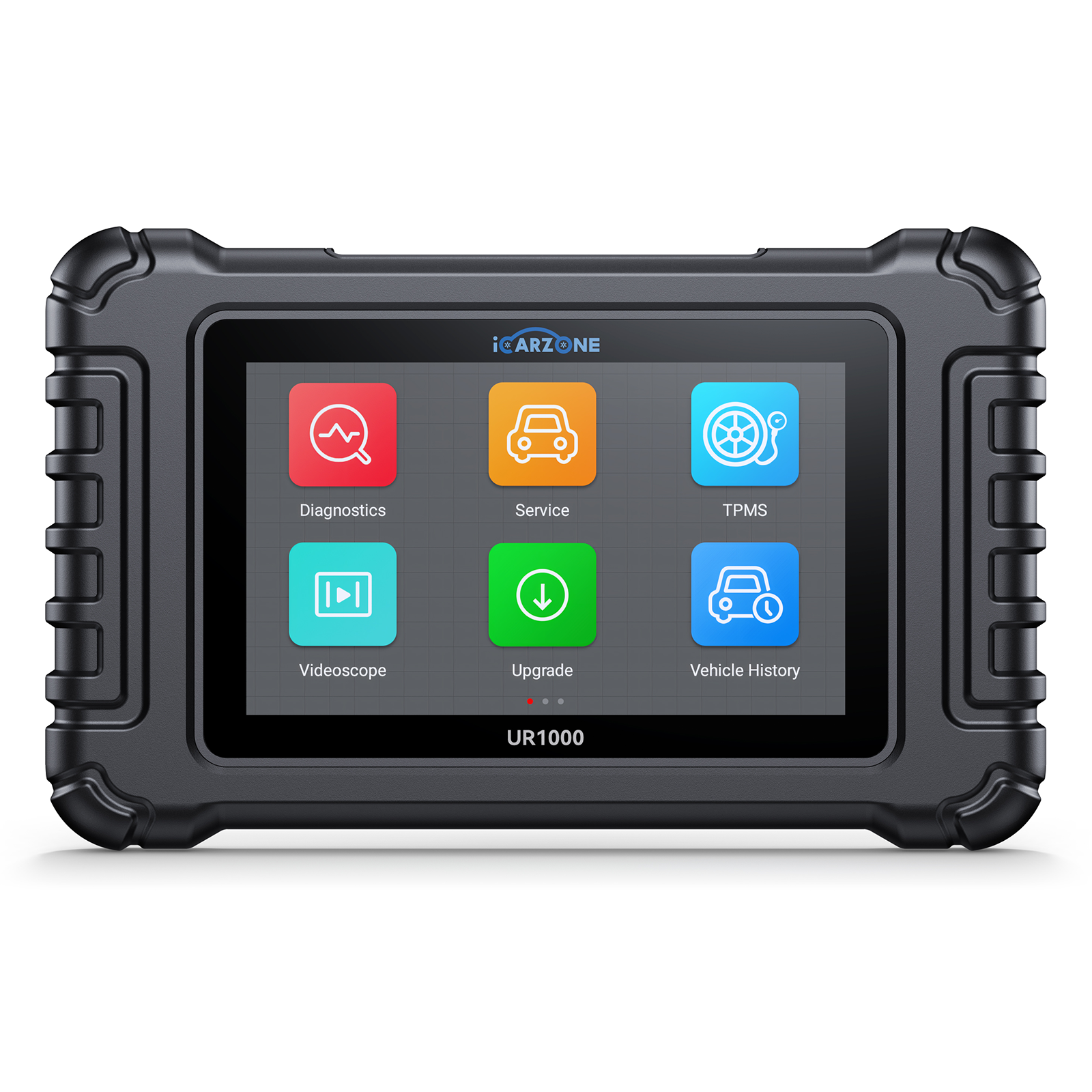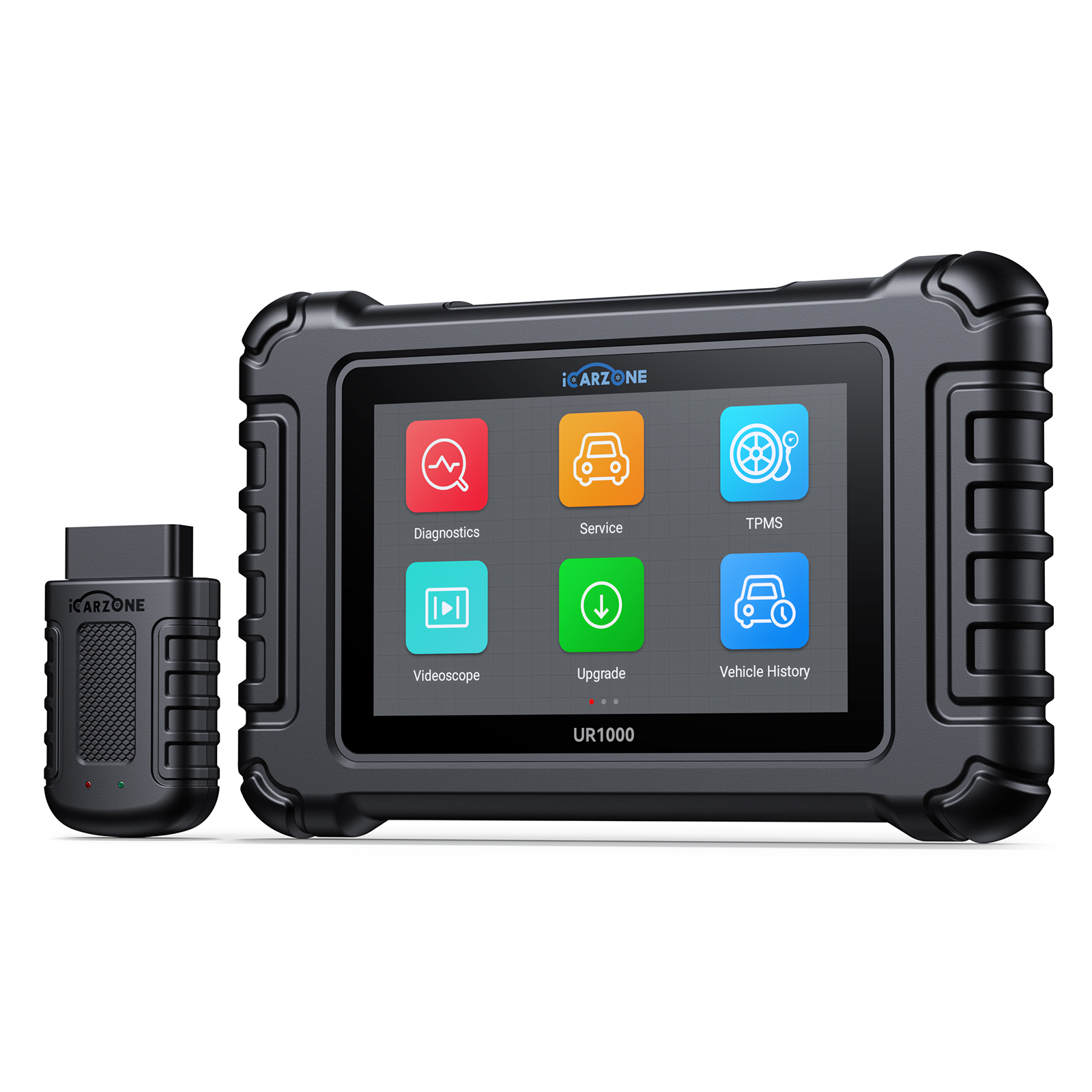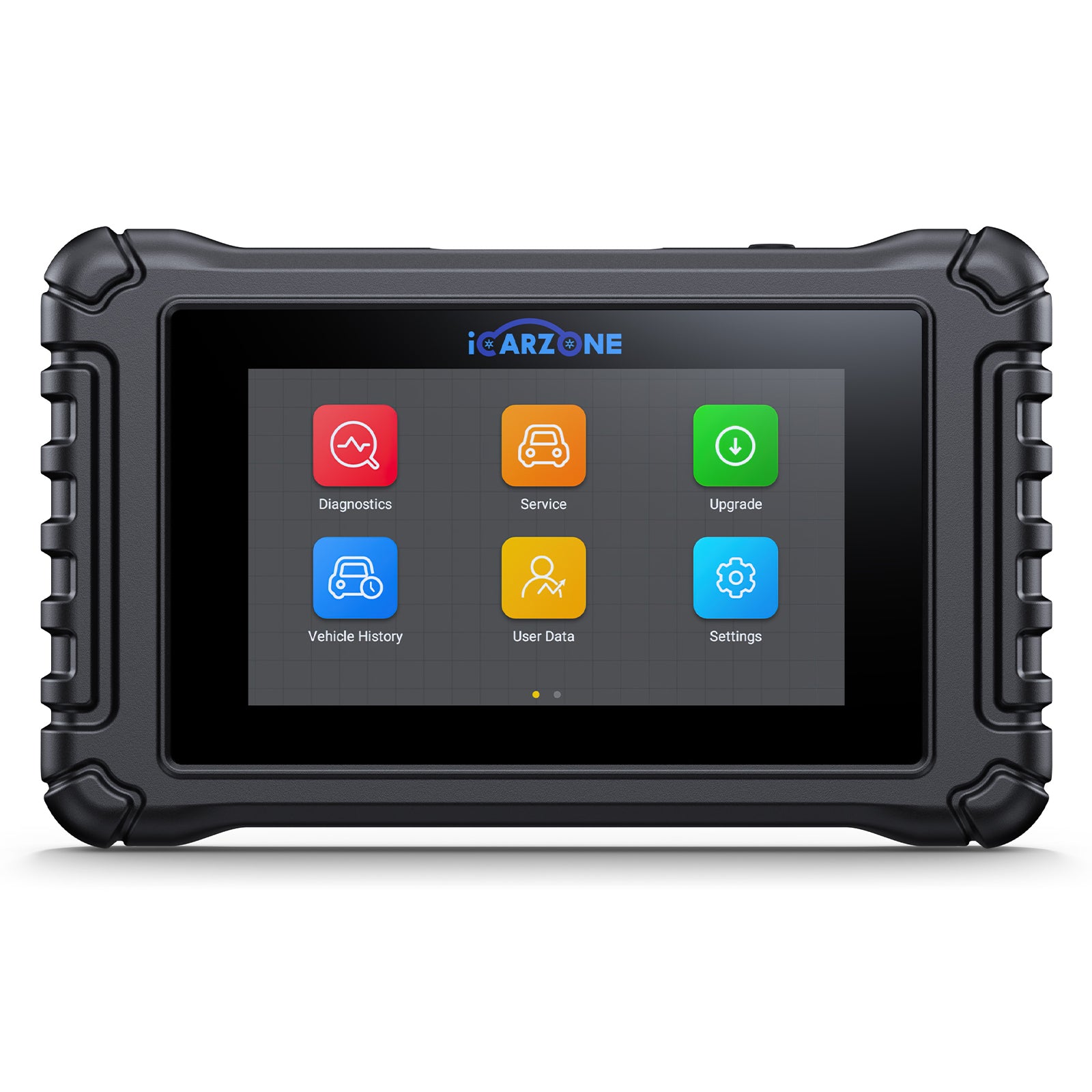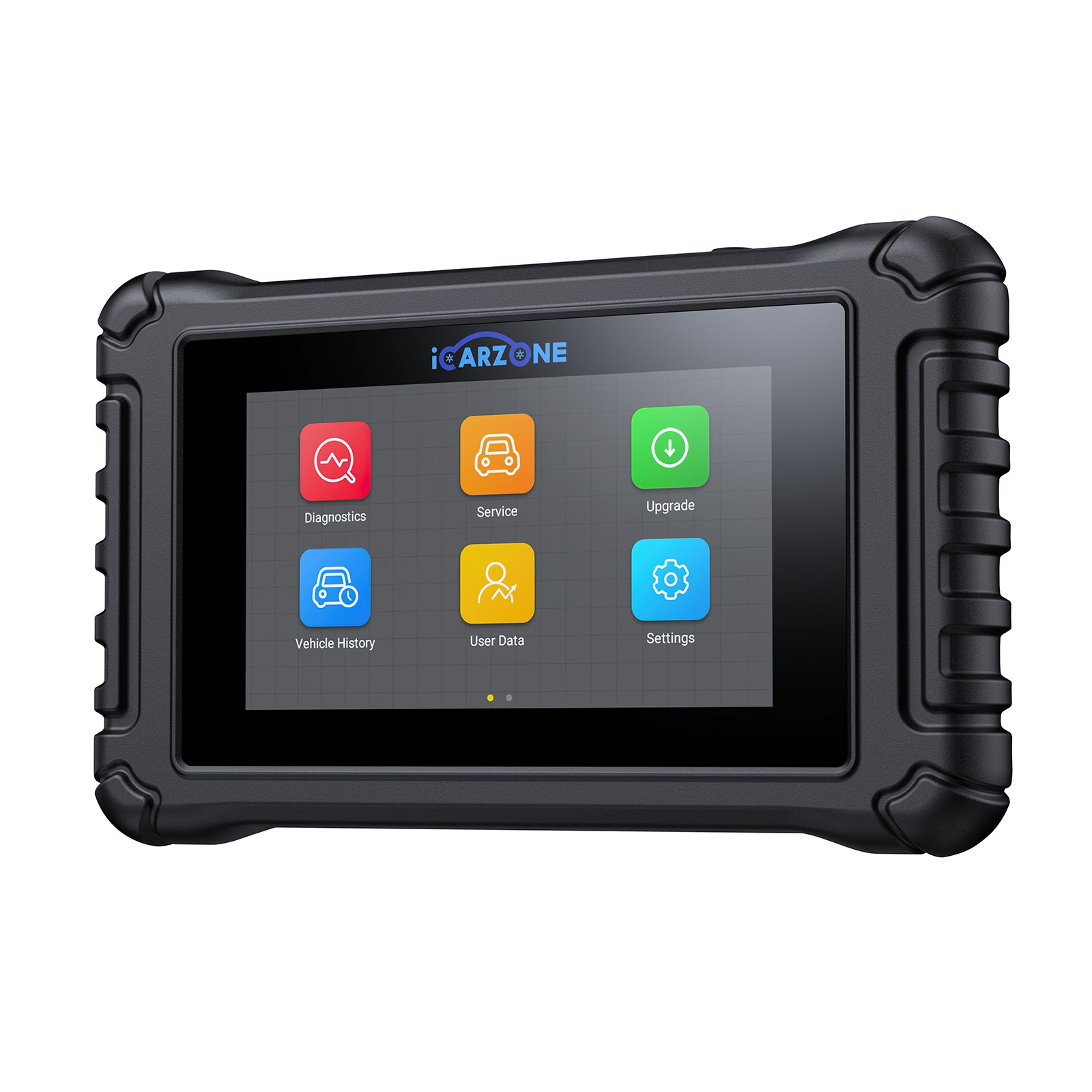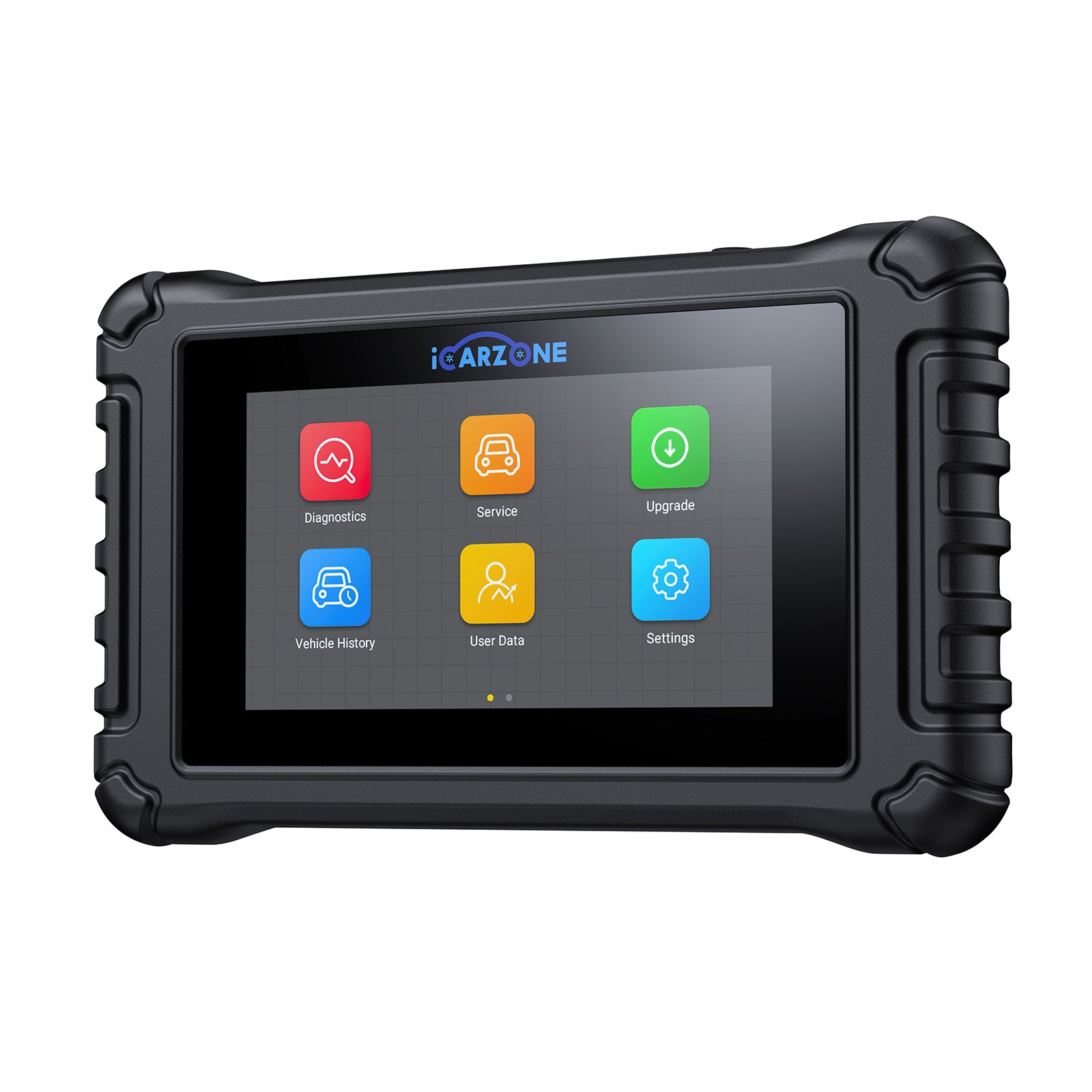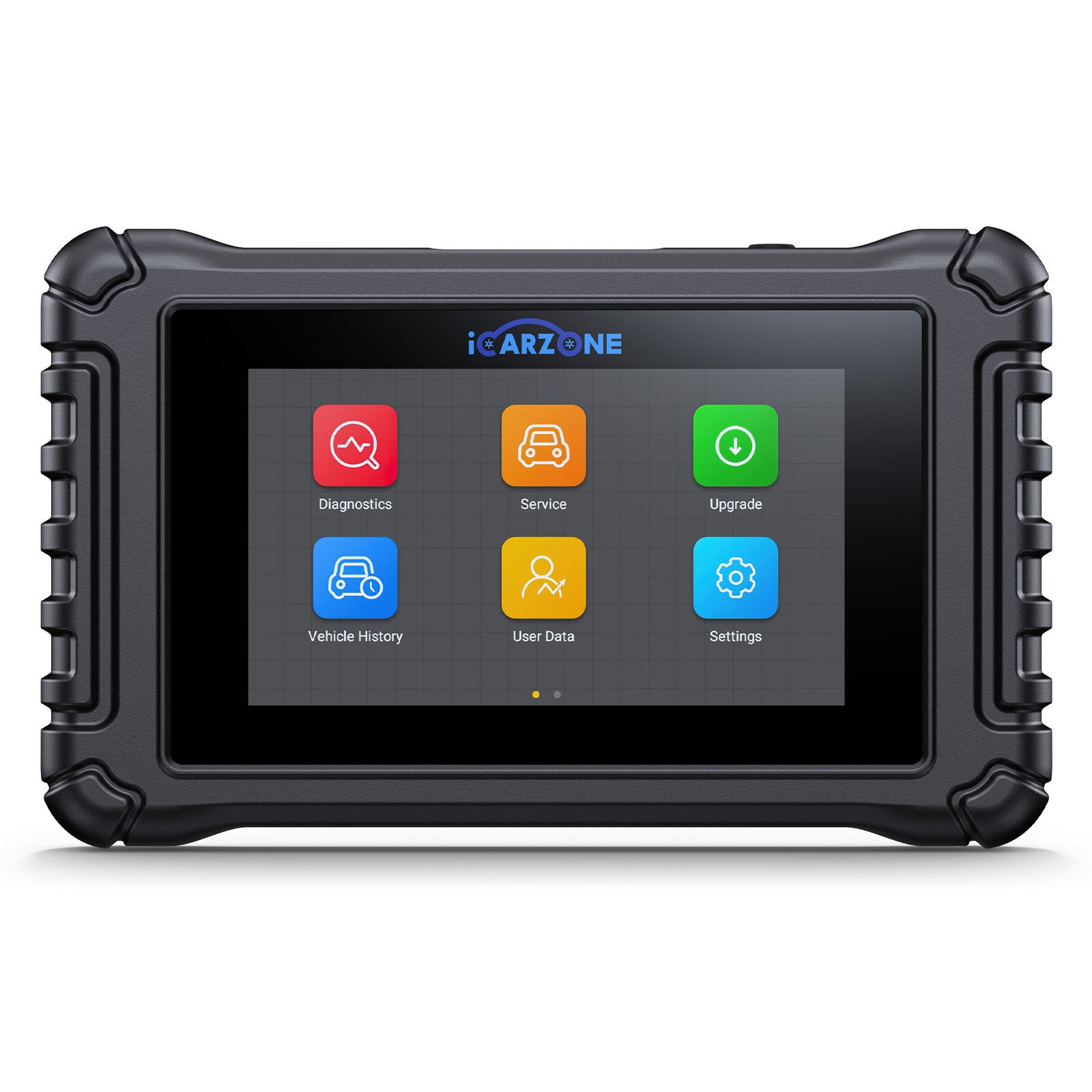

P2195 Code in Ford F-150: Fix O2 Signal Stuck Rich with ICARZONE UR1000

P2195 Code in Ford F-150: Fix with ICARZONE UR1000
Solve Bank 1 Sensor 1 oxygen sensor signal stuck rich issues in 2015-2024 F-150. Diagnose & repair with UR1000’s Ford-specific tools.
Fix P2195 with UR1000 Now1. What is P2195 in Ford F-150?
P2195 is an OBD-II Diagnostic Trouble Code defined as Oxygen Sensor Signal Stuck Rich (Bank 1, Sensor 1). For the Ford F-150—America’s best-selling pickup for 46 years—this code targets the upstream oxygen sensor (mounted before the catalytic converter on Bank 1) that regulates the 2.0L, 3.5L, or 5.0L engine’s air-fuel mixture.
The F-150’s engine control module (ECM) expects the upstream O2 sensor to send fluctuating voltage signals (0.1V–0.9V) as the air-fuel mixture shifts between lean and rich. P2195 triggers when the sensor stays stuck above 0.8V for 10+ seconds—signaling a persistent "rich" condition (too much fuel, too little air). This is widespread in 2015-2021 F-150s, addressed in Ford Technical Service Bulletin (TSB) 19-2247 for 3.5L EcoBoost models.

2. Common Causes in 2015-2024 F-150 Models
Failing Upstream O2 Sensor (2019 F-150 XLT 3.5L EcoBoost): A 2019 XLT owner with 68,000 miles noticed reduced towing power. UR1000’s Oxygen Sensor Signal Test showed voltage stuck at 0.92V (normal: 0.1–0.9V). The sensor’s ceramic element degraded from frequent heavy towing—replacing with OEM sensor #BL3Z-9F472-A restored normal voltage fluctuations.Fuel Injector Leak (2018 F-150 Lariat 5.0L V8): A 2018 Lariat owner’s P2195 appeared with a strong fuel odor. UR1000’s Fuel Injector Balance Test identified a leaking injector on cylinder #3. The 5.0L’s port injection system had a stuck-open injector, flooding the exhaust—replacing the injector (#CM5E-9F593-AA) eliminated the rich signal.Mass Air Flow (MAF) Sensor Contamination (2020 F-150 XL 2.7L EcoBoost): A 2020 XL owner in a dusty region had intermittent P2195. UR1000’s MAF Sensor Test showed inaccurate airflow readings (2.1g/s at idle; normal: 3.5–4.5g/s). Dust buildup on the MAF sensor caused the ECM to overfuel—cleaning with MAF cleaner (#XL-35-1) fixed the issue.ECU Calibration Issue (2022 F-150 Platinum 3.5L PowerBoost): A 2022 PowerBoost owner’s P2195 appeared after a software update. UR1000’s Ford TSB Lookup found TSB 22-1445, which fixed overly sensitive O2 sensor thresholds in early hybrid models. Updating the ECU with UR1000 cleared the false code.
3. Key Symptoms in Ford F-150
Performance & Efficiency
- Steady Check Engine Light (may flash under heavy load)
- Fuel economy drop (2–4 MPG in 3.5L EcoBoost)
- Reduced towing capacity (F-150 feels "sluggish" with trailers)
- Rough idle after cold starts (lasts 45–60 seconds)
- Strong fuel odor from exhaust (unburned fuel)
System-Specific Signs
- Upstream O2 sensor voltage stuck above 0.8V (via UR1000 live data)
- Failed emissions tests (high hydrocarbon levels)
- 2018+ F-150s: "Fuel System Fault" dash message
- PowerBoost hybrids: Reduced EV mode activation
- Black smoke from exhaust (visible during hard acceleration)
4. F-150 Engines/Trims Prone to P2195
Ford service data highlights these 2015-2024 F-150 configurations with the highest P2195 incidence:
| Engine | Model Years | F-150 Trims | % of P2195 Cases | Primary Risk Factor |
|---|---|---|---|---|
| 3.5L EcoBoost V6 (GTDI) | 2015–2021 | XLT, Lariat, Platinum | 52% | Turbo boost pressure + TSB 19-2247 sensor issues |
| 5.0L Coyote V8 | 2015–2024 | XL, XLT, Raptor | 28% | Fuel injector leaks + MAF sensor contamination |
| 2.7L EcoBoost V6 | 2018–2024 | XL, XLT, King Ranch | 15% | MAF sensor dust buildup (off-road use) |
| 3.5L PowerBoost Hybrid | 2021–2024 | Lariat, Platinum, Limited | 5% | Early ECU calibration issues (TSB 22-1445) |
5. Diagnostic Steps with ICARZONE UR1000
Diagnose P2195 in your F-150 accurately with UR1000’s Ford-specific tools—follow these steps:
| Step | Action with UR1000 | F-150-Specific Goal | Pass/Fail Criteria |
|---|---|---|---|
| 1 | Full System Scan > Select "Ford" > "F-150" > "Engine Control Module" | Confirm P2195 + check for related codes (P2196, P0171, P0172) | Pass: Isolated P2195 | Fail: Multiple fuel trim codes (signals injector/MAF issue) |
| 2 | Live Data > "Oxygen Sensor Monitoring" | Track Bank 1 Sensor 1 voltage at idle + 2,500 RPM (towing sim) | Pass: Voltage fluctuates 0.1–0.9V | Fail: Stuck above 0.8V |
| 3 | Sensor Tests > "Oxygen Sensor Response Test" | Verify sensor reacts to throttle changes (F-150: test under light load) | Pass: Voltage shifts <0.5s after throttle input | Fail: No response |
| 4 | Engine Tests > "Fuel Injector Balance Test" | Check for leaking injectors (3.5L/5.0L: focus on Bank 1 cylinders) | Pass: All injectors within 5% flow rate | Fail: >10% variance (leaking injector) |
| 5 | Service Functions > "Ford TSB Lookup" | Enter F-150’s VIN to check TSB 19-2247 (2015-2021) or 22-1445 (2021+) | Pass: No relevant TSB | Fail: TSB applies (follow Ford’s fix) |
Case Example: A 2019 F-150 3.5L EcoBoost failed Step 2 (voltage stuck at 0.95V) and Step 3 (no response). UR1000’s Component Location tool showed the upstream sensor near the driver’s-side exhaust manifold. Replacing the OEM sensor (#BL3Z-9F472-A) and clearing codes with UR1000 fixed P2195—verified by a towing test (sensor voltage fluctuated normally with a 5,000-lb load).

6. Fixes for F-150's P2195
Resolve P2195 in your F-150 with these UR1000-verified fixes—tailored to specific causes:
1. Replace Upstream Oxygen Sensor (Bank 1, Sensor 1)
- Confirm sensor failure via UR1000’s Oxygen Sensor Test.
- Locate the sensor (F-150-specific positions):
- 3.5L/2.7L EcoBoost: Driver’s-side exhaust manifold, near turbo
- 5.0L V8: Driver’s-side cylinder head, below air intake
- PowerBoost Hybrid: Integrated with exhaust manifold (remove heat shield first)
- Disconnect battery + let exhaust cool (45+ minutes for turbo models).
- Remove sensor with a 7/8" oxygen sensor socket (use penetrating oil for rusted units).
- Install OEM sensor with anti-seize (avoid sensor element):
- 2015–2021 3.5L/5.0L: #BL3Z-9F472-A
- 2022–2024 2.7L/PowerBoost: #BL3Z-9F472-B
- Torque to 30 ft-lbs, reconnect battery, and clear codes with UR1000.
2. Repair Fuel Injector Leaks (5.0L V8)
- Identify leaking injector via UR1000’s Fuel Injector Balance Test.
- Disconnect battery and remove intake manifold (5.0L: use torque wrench for removal).
- Remove old injector (press tab to release fuel line) and replace with OEM part:
- 2015–2020 5.0L: #CM5E-9F593-AA
- 2021–2024 5.0L: #HL3Z-9F593-A
- Install new O-rings (use fuel-safe lubricant) and torque injector to 18 ft-lbs.
- Reassemble intake manifold, clear codes with UR1000, and test drive.
3. Clean MAF Sensor (2.7L EcoBoost)
- Locate MAF sensor (2.7L: between air filter and turbo inlet).
- Disconnect sensor connector and remove with Torx T20 screws.
- Spray MAF cleaner (#XL-35-1) on sensor wires—do not touch wires with hands.
- Let sensor dry completely (15–20 minutes) before reinstalling.
- Reconnect and run UR1000’s MAF Sensor Calibration to sync with ECM.
7. Repair Costs & Maintenance Tips
F-150 P2195 repair costs vary by cause—use this table to budget:
| Repair Type | DIY Parts Cost | Professional Repair Cost | F-150 Models Affected |
|---|---|---|---|
| Upstream O2 Sensor Replacement | $70–$130 (OEM) | $210–$330 (parts + 1.5hr labor) | All models (3.5L EcoBoost most common) |
| Fuel Injector Replacement (per injector) | $110–$180 (OEM) | $380–$550 (parts + 2hr labor) | 2015–2024 5.0L V8 |
| MAF Sensor Cleaning/Replacement | $10–$90 (cleaner + OEM sensor) | $120–$200 (parts + 1hr labor) | 2018–2024 2.7L EcoBoost |
| ECU Software Update (TSB 22-1445) | $0 (with UR1000) | $180–$250 (dealer fee) | 2021–2024 PowerBoost Hybrid |
| Fuel System Cleaning (for rich deposits) | $25–$50 (fuel injector cleaner) | $150–$220 (professional service) | All models (60k+ miles) |
| DIY Diagnosis with UR1000 | $0 (one-time tool investment) | $150–$200 (dealer diagnostic fee) | All models |
Maintenance Tips for F-150 Owners
- 3.5L EcoBoost (2015–2021): Replace upstream O2 sensor every 80,000 miles (preventive, per TSB 19-2247).
- 5.0L V8: Use fuel injector cleaner every 10,000 miles to prevent leaks (Ford-recommended: #XC-23-B).
- 2.7L EcoBoost: Clean MAF sensor every 30,000 miles—especially if using the F-150 for off-roading.
- PowerBoost hybrids: Check for ECU updates quarterly with UR1000 (addresses calibration issues).
- All F-150s: Use top-tier gasoline (87+ octane) to reduce carbon buildup on O2 sensors.
- After sensor replacement: Perform a 100-mile "learning drive" (vary speeds 40–65 MPH) to reset ECM fuel trim.
8. Preventive Maintenance for F-150
Avoid P2195 in your F-150 with these Ford-recommended steps:
-
Oxygen Sensor Care:
- For 3.5L EcoBoost: Install an aftermarket heat shield (#3C3Z-9439-A) around the upstream sensor.
- Inspect sensor wiring every oil change—secure loose harnesses to avoid contact with hot components.
- Replace O2 sensors in pairs (Bank 1 + Bank 2) if one fails—ensures balanced fuel trim.
-
Fuel System Maintenance:
- Change fuel filter every 60,000 miles (prevents injector clogging).
- Avoid letting fuel level drop below 1/4 tank—prevents fuel pump overheating and injector damage.
- Use fuel system cleaner annually (Ford-approved: #XC-23-B) to remove carbon deposits.
-
Air Intake Care:
- Replace air filter every 15,000 miles (more often if driving in dusty areas).
- Inspect MAF sensor for dust/debris during air filter changes—clean with dedicated MAF cleaner.
- For off-road F-150s: Install a snorkel or pre-filter to protect the MAF sensor.
-
Software & Updates:
- Check for Ford TSB updates every 6 months with UR1000.
- Install ECM calibrations for fuel systems immediately (e.g., TSB 22-1445 for hybrids).
9. F-150-Specific FAQs
Short-term only (100–200 miles). P2195 causes excessive fuel consumption and can damage the catalytic converter (costing $1,200+). Avoid towing or heavy acceleration until fixed.
The 3.5L’s twin turbos create high exhaust temps (1,300°F+) that degrade O2 sensor elements faster. Ford’s TSB 19-2247 addresses this with improved sensor materials for 2015-2021 models.
We recommend OEM sensors—aftermarket units often fail in 6–12 months. Ford’s OE sensors are calibrated for the F-150’s turbocharged exhaust, ensuring accurate rich/lean signal shifts.
Yes—UR1000 fully supports 2024 F-150 Raptor R and its 5.2L supercharged V8, including Ford’s latest diagnostic protocols for O2 sensor and fuel system testing.